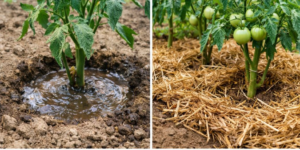
Twisted or curling tomato leaves can be alarming, but in most cases, it is a physiological reaction rather than a terminal disease. This phenomenon, often called “leaf roll,” is the plant’s way of protecting itself from environmental stress. By understanding why the leaves are curling—whether it’s to prevent water loss or a reaction to a nutrient imbalance—you can fix the issue with a few simple adjustments to your gardening routine.
Why Tomato Leaves Twist and Curl
1. Environmental Stress (The Most Common Cause)
When the weather is extremely hot or windy, tomatoes curl their leaves upward to reduce the surface area exposed to the air. This helps the plant retain precious moisture. ☀️🌡️
2. Excessive Pruning
If you remove too many “suckers” or leaves at once, the plant undergoes a hormonal shock. This often results in the remaining leaves thickening and twisting as the plant tries to redirect its energy.
3. Nutrient Imbalance
A diet too rich in nitrogen but low in phosphorus can cause leaves to curl and become unnaturally dark green. Conversely, a lack of copper can cause the new leaves to twist and remain small. 🧪📉
4. Irregular Watering
Tomatoes love consistency. If the soil goes from bone-dry to soaking wet, the sudden intake of water can cause the cells in the leaves to expand unevenly, leading to a distorted, curled appearance.
The Simple Solutions to Restore Your Plants
Step 1: Stabilize the Moisture
Instead of heavy, occasional watering, provide your tomatoes with a steady, moderate supply of water. Applying a thick layer of mulch (straw or dried grass) around the base of the plant is the best way to keep soil temperature and moisture levels constant. 💧🛡️
Step 2: Provide Shade During Heatwaves
If the leaves only curl during the hottest part of the day and relax at night, the plant is simply hot. Using a light shade cloth or even moving potted tomatoes into the shade for a few hours will solve the problem instantly.
Step 3: The Magnesium Boost
Often, twisting is accompanied by yellowing between the veins. A simple solution is to dissolve 1 tablespoon of Epsom salts in 4 liters of water and spray the leaves. This magnesium boost helps the plant process sunlight more efficiently and relaxes the foliage. ✨🌿
Step 4: Check for Pests
Gently unroll a leaf to check for aphids or mites. If you see tiny insects, a simple spray of soapy water or neem oil will clear the infestation and allow the new growth to emerge straight and healthy.
Leave a Reply