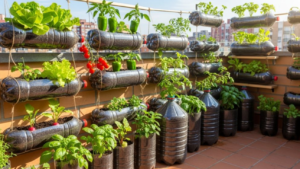
Watering your garden from above is often inefficient; much of the water evaporates before it ever reaches the roots, and wet leaves can encourage fungal diseases like blight. By burying plastic bottles as “subterranean reservoirs,” you create a localized irrigation system that provides a steady, deep supply of moisture. This method encourages plants to grow deeper root systems, making them more resilient to heatwaves and drought.
The Science of Bottle Irrigation
1. Direct Root Hydration
When you pour water onto the soil surface, it can struggle to penetrate deep into the earth. With a buried bottle, the water is released 10–20 cm underground, exactly where the roots need it most. 📉💧
2. Evaporation Prevention
During a hot summer, up to 50% of surface-applied water can be lost to the air. Because the bottle system is enclosed and underground, almost 100% of the water is used by the plant. ☀️🛡️
3. Nutrient Delivery
This system is perfect for liquid fertilizers. By adding your organic nutrients directly into the bottle, you ensure they reach the root zone immediately without being washed away or diluted by surface runoff. 🧪✨
How to Build Your “Automatic” Watering System
Materials:
- Used 1.5 or 2-liter plastic bottles.
- A small nail or needle.
- An old cotton sock or piece of fabric (optional).
Instructions:
- Perforation: Use a hot nail to poke 4–6 tiny holes in the bottom half of the bottle. Warning: Keep the holes very small; if they are too large, the water will drain out instantly rather than seeping slowly. 📍
- The “Sock” Filter (Pro Tip): Wrap the bottle in a thin piece of fabric or an old sock. This prevents soil and fine roots from clogging the holes over time. 🧦
- Installation: Dig a hole next to your plant (tomatoes, peppers, and cucumbers love this). Bury the bottle so only the neck and cap are visible above the soil. 🏺
- Filling: Fill the bottle with water and screw the cap on loosely. A tight cap will create a vacuum and stop the water flow; a loose cap allows air in so the water can seep out slowly. 🚿
Why It’s Perfect for Holiday Travel
If you are going away for a few days, this system acts as a “nanny” for your plants. A 2-liter bottle can keep a tomato plant hydrated for 3 to 5 days, depending on the heat and the size of your drainage holes. 🏖️🌿
Leave a Reply