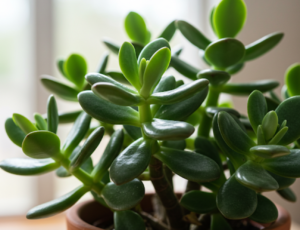
The Jade plant is a symbol of prosperity and good luck in many cultures. Because it is a succulent, its leaves are thick reservoirs of water and nutrients, containing all the genetic “blueprints” necessary to grow a brand-new root system and stem. The secret to success isn’t constant watering; it is actually patience and providing the right environment for the leaf to heal before it starts to grow.
The 4 Essential Steps for Success
1. The Perfect Leaf Harvest
Select a healthy, firm, and plump leaf from a mature plant. Do not use scissors; instead, gently “twist” the leaf off the stem.
- Critical Rule: You must ensure a “clean pull.” If the base of the leaf stays on the stem or gets torn, it will likely rot instead of growing roots. 🍃
2. The “Callusing” Period
This is the most important step that most beginners skip. Place your harvested leaves on a dry paper towel in a shaded area for 3 to 5 days.
- Why: The “wound” where the leaf was attached needs to dry out and form a protective skin (callus). If you put a fresh leaf directly onto moist soil, bacteria will enter the wound and kill the leaf. ⏳🛡️
3. The “Lay and Wait” Method
Once callused, place the leaves on top of a well-draining succulent or cactus soil mix.
- Do not bury them. Simply let the base of the leaf touch the soil.
- Lighting: Place the tray in a bright spot with indirect sunlight. Direct hot sun will shrivel the leaves before they can root. ☀️🏺
4. Minimalist Watering
For the first two weeks, do not water at all. The leaf has enough internal moisture to survive. Once you see tiny pink hair-like roots emerging from the base, you can begin to mist the soil lightly every few days. Avoid soaking the soil. 🚿🚫
The Transformation
After about a month, a tiny miniature Jade plant (a “plantlet”) will appear at the base of the leaf. As the new plant grows, the original mother leaf will slowly shrivel and turn brown. Do not pull it off! The new plant is still absorbing the last bits of energy from that leaf. Let it fall off naturally. 📈🌱
Pro Tip: The “Water Bottle” Alternative
If you find that your leaves are shriveling too fast, try the “Hydro-Tent” method:
- Fill a plastic bottle with 2 cm of water.
- Cut small slits in the side of the bottle and tuck the callused ends of the leaves into the slits (so they are suspended above the water, not touching it).
- The humidity inside the bottle will trigger rapid root growth without the risk of rot! 💧✨
Leave a Reply