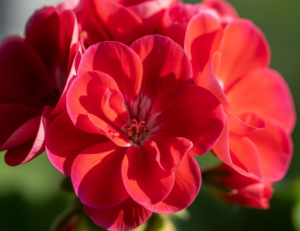
Geraniums (Pelargonium) are iconic garden favorites, known for their vibrant clusters of flowers and hardy nature. 🌸 However, even these resilient plants have specific boundaries that, when crossed, lead to yellowing leaves, rot, or a complete lack of blooms. In 2026, understanding the biology of these sun-loving plants is the key to having the best balcony in the neighborhood. To keep your geraniums thriving, you must avoid these 10 common mistakes that they absolutely hate. 📈✨🌿
1. “Wet Feet” (Overwatering) 📝
The number one killer of geraniums is too much love. 🚿 Geraniums are semi-succulent, meaning they store water in their thick stems. If the soil is constantly saturated, the roots cannot breathe and will begin to rot. Always wait until the top 2-3 cm of soil are completely dry before watering again. 💧🚫
2. Lack of Direct Sunlight ☀️
Geraniums are solar-powered. To produce those massive flower heads, they require at least 6 to 8 hours of direct sunlight every day. If kept in the shade, the plant will become “leggy” (stretched out), the leaves will turn pale, and flowering will stop entirely. 📉🌑
3. Poor Drainage 🛠️
Even if you water correctly, a pot without drainage holes is a death trap. 🏺 Water must be able to escape the bottom of the container freely. Without drainage, salts and moisture build up at the bottom, leading to “edema”—a condition where the plant cells literally burst from absorbing too much liquid. 🌬️🚿
4. High Humidity and Wet Leaves 💡
Unlike tropical ferns, geraniums prefer dry air. High humidity or, worse, watering the plant from above and getting the leaves wet, encourages fungal diseases like Botrytis (grey mold) and rust. Always water at the base of the plant, keeping the foliage as dry as possible. 🌬️🚫🦠
5. Extremely Small Pots 🏗️
While geraniums don’t mind being slightly snug, a severely root-bound plant will struggle to absorb enough nutrients to support flowers. If you see roots growing out of the drainage holes, it is time to move up to a slightly larger container to give the plant the “lung room” it needs. 🏺📏
6. Cold Temperatures and Drafts ❄️
Geraniums are warm-weather plants. They hate frost and even struggle when temperatures dip below $10^{\circ}\text{C}$. Sudden cold drafts can cause the leaves to turn red or purple as a sign of stress. In 2026, keep a close eye on spring weather alerts and bring them indoors if a late frost is predicted. 📉🌡️
7. Neglecting to “Deadhead” ✂️
Leaving faded, brown flowers on the plant is a major mistake. If the plant is allowed to keep its dead flowers, it starts focusing its energy on producing seeds. By “deadheading”—snapping off the faded flower stalks at the base—you trick the plant into thinking its job isn’t done, triggering it to produce even more blooms. 🌸🔋
8. Compacted, Heavy Soil 🧪
Geraniums need oxygen at the root level. Using heavy garden soil or old, compacted potting mix prevents air from reaching the roots. Always use a light, professional potting mix enriched with perlite or coarse sand to ensure the soil stays “fluffy” and aerated. 🏺✨
9. Nutrient Starvation 🥗
Because they bloom so prolifically, geraniums are “heavy feeders.” They hate being ignored during the growing season. A lack of potassium and phosphorus will result in small, infrequent flowers. Feed them with a liquid organic fertilizer every two weeks during the summer to maintain their energy levels. 🧪📈
10. Crowding and Poor Airflow 🌬️
Planting too many geraniums in one window box is a recipe for disaster. 📦 Without proper airflow between the plants, humidity gets trapped, and pests like whiteflies and spider mites find a perfect hiding spot. Space your plants at least 20-30 cm apart to ensure they can “breathe.” 🛡️🦋
By respecting these 10 simple rules, you provide your geraniums with an environment that mimics their Mediterranean-style origins. The result will be a plant that is not just surviving, but exploding with color all the way into the autumn. 🏡🌸✨
Leave a Reply