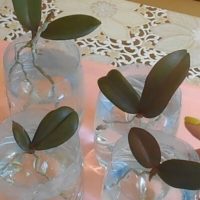
If your orchid has produced keikis (baby plants / offshoots), it’s time to separate them! Doing it the right way helps the mother plant stay healthy and gives the new little orchids the best chance to grow strong. This simple method greatly reduces the risk of fungal infections, rot, and pest attacks. 🪴✨
When to Separate Keikis?
- When the baby plant has at least 2–3 roots that are 5–7 cm long.
- When it has 2–3 small leaves.
- Best time: spring or early summer.
Step-by-Step Guide to Separate and Plant Orchid Cuttings 🛠️
What you need:
- Sharp, sterilized scissors or scalpel
- Cinnamon powder or activated charcoal (for wound disinfection)
- Small transparent pot with drainage holes
- Fresh orchid substrate (bark mix)
- Fungicide (optional but recommended)
Instructions:
- Prepare everything — sterilize tools with alcohol.
- Gently separate the keiki from the mother plant by cutting the stem about 1–2 cm below the baby plant.
- Disinfect the cut on both the mother plant and the keiki with cinnamon powder or activated charcoal.
- Let the keiki dry for 30–60 minutes in a shaded place.
- Plant it in a small pot with orchid bark mix. Do not bury the base too deep.
- Water sparingly at first — only when the substrate is almost dry.
- Place the new plant in bright indirect light (no direct sun).
Aftercare for the New Orchid 🌱
- Keep humidity high (60–70%) — use a humidity tray or mist occasionally.
- Fertilize with a weak orchid fertilizer after 2–3 weeks.
- Avoid overwatering — this is the #1 cause of rot in young orchids.
- The mother plant usually recovers quickly and may produce even more flowers.
Why This Method Prevents Problems ✅
- Proper separation and disinfection stop the spread of fungi and bacteria.
- Using the right substrate and small pot prevents water retention and rot.
- Healthy roots develop faster in their own pot.
Conclusion 🌈
Separating orchid keikis correctly is one of the best ways to multiply your collection while keeping both the mother plant and the babies healthy. With this careful method, you’ll avoid infestation and rot and enjoy more beautiful orchids!
Disclaimer: Always use clean tools and observe your plants closely. Results may vary depending on the orchid variety and growing conditions. ⚕️
Leave a Reply