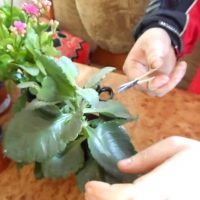
Kalanchoe is one of the easiest and most rewarding houseplants to propagate. While most people use leaf or stem cuttings, there’s a very original and effective method that allows you to quickly get beautiful, bushy new plants. This technique is especially good for varieties that grow in clumps. 🪴✨
The “Bush Division” + Aerial Roots Method
This method combines dividing the mother plant with using its natural ability to form aerial roots.
Best time: Spring or early summer (during active growth).
Step-by-step:
- Choose a healthy mature plant Select a well-grown Kalanchoe that has several stems and preferably some aerial roots already forming.
- Divide the bush Carefully remove the plant from its pot. Gently separate the root ball into 2–4 parts, making sure each section has roots and several stems.
- Prepare the new cuttings If some stems have aerial roots — even better! Cut healthy stems 8–12 cm long just below a node. Remove the lower leaves, leaving 3–4 leaves at the top.
- Plant the divisions Plant each divided section or cutting into a separate small pot with light, well-draining soil (cactus/succulent mix is ideal). Water lightly and place in bright indirect light.
- Create humidity (optional but helpful) Cover the young plants with a transparent plastic bag or cut bottle for the first 7–10 days to increase humidity and speed up rooting.
Extra Tips for Success 💡
- Kalanchoe roots very easily — you can even put cuttings in water first until roots appear.
- Do not overwater! Let the soil dry out slightly between waterings.
- After 3–4 weeks, start feeding with a diluted succulent fertilizer.
- Pinch the tops of young plants to encourage bushier growth.
Conclusion 🌈
This original propagation method lets you quickly multiply your Kalanchoe collection and get strong, bushy plants in a short time. It’s simple, effective, and perfect for both beginners and experienced plant lovers!
Disclaimer: Always use clean tools and observe the new plants during the first weeks. Results may vary slightly depending on the Kalanchoe variety and growing conditions. ⚕️
Leave a Reply