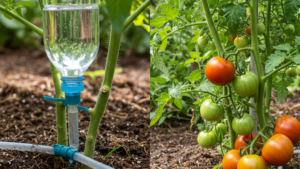
Tired of watering your garden or pots every day, especially during hot weather or when you’re away? This brilliant DIY irrigation system made from plastic bottles is cheap, ecological, and incredibly effective. It delivers water slowly and directly to the roots, saving time and water while keeping your plants happy! 🪴💧
How to Make the Bottle Irrigation System
Materials needed:
- Plastic bottles (1.5L or 2L work best)
- Scissors or a knife
- A nail or awl (to make holes)
Step-by-step:
- Prepare the bottle Cut off the bottom of the bottle (about 5–7 cm from the base). Keep the cap on.
- Make drainage holes Use a nail or awl to poke 4–6 small holes in the cap (or near the neck). This controls the water flow.
- Install in the garden/pot Dig a hole next to the plant (about 10–15 cm deep). Place the bottle upside down (neck down) into the hole. Fill the bottle with water. The water will slowly drip through the holes directly to the roots.
- For pots You can place the bottle vertically or at an angle in large pots. Just make sure the neck is buried slightly in the soil.
Advantages of This System ✨
- Waters plants for several days without your intervention
- Reduces water waste (no evaporation or runoff)
- Prevents fungal diseases by keeping leaves dry
- Ideal for vacations or busy schedules
- Recycles plastic bottles — eco-friendly!
Pro Tips:
- For larger plants or very hot weather, use 2-liter bottles.
- Add a little fertilizer to the water occasionally for extra nutrition.
- Cover the top of the bottle with a small stone or lid to prevent mosquitoes and debris.
Conclusion 🌈
This plastic bottle irrigation system is one of the simplest and most effective DIY solutions for gardeners. It’s perfect for vegetable gardens, flower beds, balconies, and potted plants. Once installed, your plants will thank you with healthy growth and beautiful blooms!
Disclaimer: These are practical gardening tips. Adjust the number and size of holes according to your climate and plant needs. ⚕️
Leave a Reply