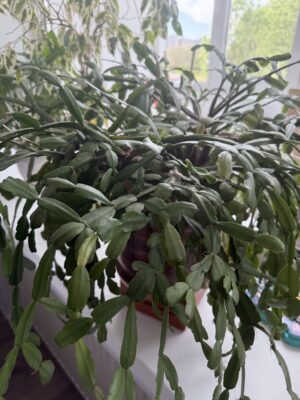
The Christmas Cactus (botanically known as Schlumbergera) is a fascinating houseplant. It brings an explosion of color into our homes right during the winter season, just when most other plants enter their dormancy period. Although it bears the name “cactus,” its origins and needs are very different from the desert cacti we are typically used to.
Origin and Characteristics of the Plant
Unlike spine-covered cacti that love the scorching sun, the Christmas Cactus is an epiphytic plant native to the humid tropical rainforests of Brazil. In its natural environment, it grows on tree branches or rocks, sheltered by dense foliage.
• Segmented Stems: The plant does not have true leaves; instead, it features green, flat, and segmented stems that hang down gracefully.
• Thornless: The edges of the segments may be slightly scalloped or toothed, but they completely lack sharp spines.
• Spectacular Flowers: The tubular, asymmetrical flowers appear at the tips of the stems and can bloom in vibrant shades of red, pink, white, orange, yellow, or purple.
The Secret to Blooming: How to Stimulate Flowers?
The biggest challenge, but also the greatest joy for lovers of this plant, is the blooming process. To ensure your plant flowers abundantly during the winter holidays, you must provide it with a rest period starting in mid-autumn (late September or early October).
The process relies on three critical factors:
1. Light Regimen (Short Days): The Christmas Cactus needs short days and long nights to form buds. For about 6 weeks, the plant must be kept in total darkness for 12 to 14 hours a day. Warning: even faint artificial light (like a reading lamp or streetlights outside the window) can interrupt the blooming cycle.
2. Cooler Temperatures: The second signal for bud formation is a drop in temperature. During the rest period, the ideal temperature should be maintained between 10°C and 15°C (50°F – 59°F).
3. Reduced Watering: During the short-day treatment, the amount of water given should be reduced. The top layer of the soil must dry out completely between waterings, but be careful not to let the stems wilt or shrivel.
General Year-Round Care
To maintain a healthy plant that can live for decades, follow these simple general care rules:
• Light: It prefers bright, but indirect light. Direct summer sun can scorch its segments, turning them from a lush green to a reddish-yellow hue. An East- or North-facing window is ideal.
• Watering: Watering should be moderate. The soil needs to be slightly moist but never waterlogged. Excess water will quickly lead to root rot.
• Humidity: Coming from the rainforest, it loves humidity. If the air in your home is dry (especially in winter due to central heating), mist the plant with room-temperature water or place the pot on a tray filled with damp pebbles.
• Soil: A light, well-draining soil mix is essential. You can use standard houseplant potting soil mixed with sand or an orchid bark substrate to ensure excellent root aeration.
The Christmas Cactus is a rewarding and incredibly long-lived plant. With a little attention to its natural light and temperature cycles in the fall, it will reward you year after year with an unforgettable floral explosion, bringing holiday magic right into your home
Leave a Reply