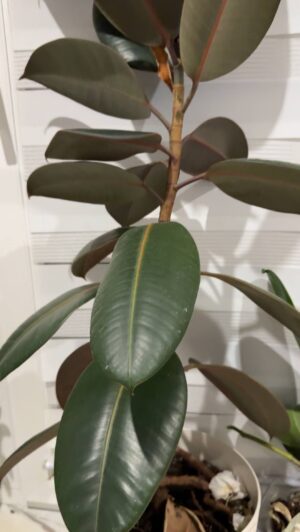
If you’ve been scrolling through plant styling feeds lately, you’ve definitely spotted a tall, striking plant with massive, glossy, dark-green leaves. That showstopper is the Ficus elastica, commonly known as the Rubber Plant.
Whether you’re a seasoned plant parent or someone who struggles to keep a cactus alive, the Rubber Plant is a fantastic addition to your indoor jungle. It’s bold, it’s beautiful, and best of all? It’s surprisingly low-maintenance.
Here is everything you need to know to keep your Ficus thriving.
The Sunlight Situation ☀️
Rubber Plants love the sun, but they are a bit picky about how they get it.
- The Sweet Spot: Bright, indirect light is your best bet. Placing it near an east or west-facing window is usually perfect.
- The Danger Zone: Direct, harsh sunlight can actually scorch those beautiful leathery leaves. On the flip side, putting it in a dark, shadowy corner will cause the plant to stretch out and drop its lower leaves in protest.
The Hydration Station 💧
When it comes to watering, the golden rule for the Ficus elastica is: less is more.
- Allow the top 2 inches of the soil to dry out completely before you reach for the watering can.
- If you overwater, the roots will rot. If you underwater, the leaves will droop. When in doubt, wait an extra day or two!
Spa Day: Keep It Glossy ✨
One of the most satisfying parts of owning a Rubber Plant is maintaining its shine. Because the leaves are so large, they tend to collect household dust.
- The Fix: Every couple of weeks, take a damp microfiber cloth and gently wipe down the top and bottom of each leaf. This doesn’t just make your plant look Instagram-ready; it actually helps the plant photosynthesize and breathe better.
Troubleshooting: Why Are the Leaves Falling? 🍂
If you notice a few dried or brown leaves sitting on the soil (like in the pot of a newly brought-home plant), don’t panic right away!
As a Rubber Plant grows taller and pushes out new leaves at the top, it naturally sheds its oldest, lowest leaves. However, if your plant is dropping middle leaves, or if the leaves are turning yellow rapidly, it’s time to check your habits. Usually, it’s a cry for help regarding watering (too much or too little) or a sign that the plant is sitting in a cold, drafty spot.
The Takeaway
The Ficus elastica is more than just a pretty face—it’s also a natural air purifier that helps filter out indoor toxins. Give it good light, don’t drown it in water, and keep its leaves dust-free, and you’ll have a stunning living sculpture in your home for years to come.
Leave a Reply