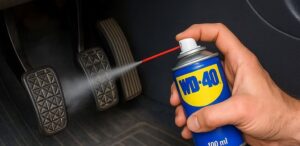
HIDDEN FEATURES OF WD-40 THAT CAR MANUFACTURERS ARE WANTING TO HIDE FROM YOU…
APPLYING WD-40 TO THE BRAKES… IS THAT POSSIBLE?
First and foremost, you should never apply WD-40 directly to the braking surface (brake discs, pads, or shoes). WD-40 is a lubricant and can drastically reduce brake friction, making the brakes a dangerous hazard.
However, you can use it for the following:
 Clean and lubricate the internal mechanisms of the drum brakes (not the brake shoes).
Before replacing parts, any stuck screws in the brake system must be loosened.
Remove moisture from parts that are not in contact with the braking surface.
If you want to clean brake discs or brake pads, always use special brake cleaning agents.
Remove tar and resin residue from the car body
Have tree sap or tar stains become embedded in your car? WD-40 is perfect for softening these residues, allowing you to easily remove them with a microfiber cloth.
Protect electrical connections from moisture
WD-40 is ideal for removing moisture from battery terminals, electrical connectors and other components exposed to water, helping you avoid short circuits and corrosion.
REMOVAL OF STUCK PARTS
If a screw or nut is stuck, a few drops of WD-40 work wonders to penetrate and loosen the accumulated rust.
Clean tools and parts
Ideal for cleaning and lubricating workshop tools, hinges or mechanical car parts for smooth gliding.
WARNING: NOT SUITABLE FOR EVERYONE
Please note that WD-40 is not a long-term lubricant for all vehicle parts. Do not use it on components where controlled friction is important (brakes, clutch) or as a substitute for specialized greases.
Leave a Reply