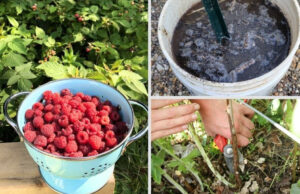
There’s nothing quite like the joy of harvesting raspberries by the handful, straight from your garden. When they’re ripe, warm from the sun, and just begging to be eaten, it’s hard not to fill baskets in one go.
But if you’ve grown raspberries before and only ended up with a handful here or there, you might wonder: what’s the secret to an overflowing harvest?
The truth is, raspberries are generous plants once they’re given the conditions they love. With a little effort, you can dramatically boost your berry yield, improve fruit size, and keep your plants healthy for seasons to come. Here are 10 proven tips that really work:
1. Feed Raspberries with Compost Tea Monthly
If there’s one game-changing habit to adopt, it’s feeding your raspberries with compost tea.
This homemade liquid fertilizer doesn’t just feed the plant — it builds healthy, living soil teeming with microbes that help roots access nutrients.
How to make it:
- Scoop about two cups of mature compost into a five-gallon bucket.
- Fill with rainwater (or tap water left to sit for 24 hours).
- Stir once or twice a day for 2–3 days.
- Strain through a cloth and pour around the base of each plant.
You can also spray it (diluted 1:5 with water) on the leaves during flowering. Apply monthly during the growing season for lush growth and fuller fruiting.
2. Pinch the Tips to Encourage Branching
When raspberry canes reach 2–3 feet tall in spring, pinch or snip off the top inch or so.
This redirects the plant’s energy into producing side branches — where most of the fruit will develop.
It’s especially useful on first-year canes.
3. Mulch Like You Mean It and Add Alfalfa Underneath
For raspberries, lay down a thin layer of alfalfa pellets or flakes, then top with 2–3 inches of clean straw.
The alfalfa slowly breaks down and feeds the plants, while the straw locks in moisture and keeps the soil cool.
Pull the mulch a few inches away from the canes to prevent rot.
4. Prune Raspberries the Right Way at the Right Time
For summer-bearing varieties, prune out the old, brown canes that fruited last year right after harvest. Leave the fresh green canes for next year’s berries.
For fall-bearing varieties, you can cut all canes to the ground in late winter for one big fall crop, or leave the strongest canes for two harvests.
Always clean your tools with rubbing alcohol between plants.
5. Spray Seaweed Extract During Flowering
When raspberries start to bloom, spray them with liquid seaweed (kelp) every two weeks.
It is rich in micronutrients and natural growth hormones that help flowers set fruit more efficiently.
6. Thin the Canes in Spring to Avoid Crowding
Remove weak, dead, or tangled canes each spring, leaving 6–8 strong canes per plant.
Good spacing improves air circulation, reduces disease, and leads to bigger fruit.
7. Keep Soil Moist with Deep, Even Watering
Give raspberries a deep drink once or twice a week (about 1.5 inches of water weekly). Drip irrigation is ideal.
Avoid wetting the leaves and use mulch to retain moisture.
8. Pick Raspberries Often
Harvest every day or two during peak season. Ripe berries come off easily.
Regular picking encourages the plant to produce more fruit and prevents mold.
9. Add Aged Manure in Fall for Next Year’s Growth
After harvest, spread a 1–2 inch layer of aged manure and top with straw. This feeds the soil for next season.
10. Rejuvenate Old Patches Every Few Years
Every 4–5 years, dig up part of the patch, divide healthy runners, and replant in fresh soil. This keeps yields high and reduces disease.
With these 10 proven tips, you can turn a small raspberry patch into a highly productive one. Consistent care, proper feeding, and smart pruning are the real secrets to harvesting buckets of sweet, juicy raspberries every year!
Try these methods and enjoy the delicious rewards! 🍓
Leave a Reply