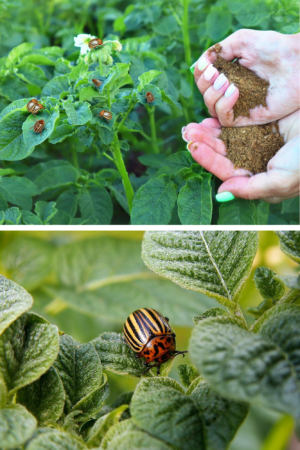
The Colorado potato beetle (Leptinotarsa decemlineata) is one of the most aggressive pests of potato crops. Resistant, adaptable, and hard to eliminate, this little “armored” beetle quickly destroys leaves, leaving only stems behind. Fortunately, experienced gardeners know that prevention and natural methods deliver excellent results — even without toxic insecticides.
1. Plants That Repel the Pest: A Natural Barrier Against Invasion
The Colorado potato beetle has a fine sense of smell and is repelled by certain strong aromas. The following plants act as a natural shield:
- Marigolds (Tagetes)
- Calendula (Calendula officinalis)
- Garlic (Allium sativum)
- Dill (Anethum graveolens)
- Beans (Phaseolus vulgaris)
- Coriander (Coriandrum sativum)
Interplant these between rows of potatoes to create an aromatic protective network. They also attract beneficial insects like ladybugs and lacewings, which are natural predators of beetle larvae.
2. Autumn and Spring Work: The Invisible Ally — Frost
The beetle overwinters in the soil at depths of 20–30 cm. To bring it out of its “bunker”:
- In late autumn, do deep plowing — this brings larvae and adults closer to the surface, where they will be exposed to frost.
- In spring, rake the soil well before planting — this destroys any remaining nests or larvae.
- After harvest, burn all plant debris — if it was infested, otherwise the cycle repeats.
3. Treatments — But Smartly!
If the infestation is severe, you can use biological treatments or, as a last resort, chemical ones — while strictly following alternation and application guidelines.
Effective biological preparations:
- Bitoxibacillin (Bacillus thuringiensis var. tenebrionis) — acts on larvae
- Actofit (based on Avermectins) — affects the pest’s nervous system
- Fitoverm (fermentative avermectin) — absorbed through the cuticle
Apply these solutions early in the morning or evening, on days without rain or wind. Repeat treatments every 7–10 days, alternating products every 2 seasons to prevent resistance.
Chemical products (last resort): Only recommended in serious cases and with strict adherence to dosages. Examples: Confidor Energy, Mospilan, Coragen.
4. Traditional Method — Manual Collection
Daily hand-picking of adult beetles and larvae from the leaves remains the safest method, especially in small gardens. Collect the insects in a jar with salted water or water with detergent — death is quick and certain. Monitor the orange eggs on the underside of leaves and destroy them before they hatch.
5. Companion Planting and Crop Rotation
- Do not plant potatoes in the same spot two years in a row.
- Associate potatoes with lentils, peas, or corn to confuse the beetle.
- Avoid planting potatoes near eggplants or tomatoes — they are also preferred by the same pest.
Fighting the Colorado potato beetle is not won in a single day. The key is consistent and integrated action:
- Prevention with repellent plants
- Good garden hygiene (proper soil work)
- Alternating treatments
- Patience and vigilance
Choose natural methods and minimize the use of chemicals. This way you protect not only your crops but also your family’s health and the soil.
Leave a Reply