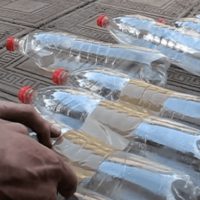
Want to get fresh vegetables much earlier in the season? This clever, low-cost method uses ordinary plastic bottles to create heated raised beds. The water inside the bottles acts as a natural heat accumulator — it warms up during the day and slowly releases heat at night, protecting plants from cold and frost. Perfect for tomatoes, cucumbers, peppers, eggplants, and more! 🪴🥕
How to Make Heated Beds with Plastic Bottles
Materials needed:
- A large number of plastic bottles (1.5L or 2L)
- Strong string or wire to connect them
- Soil and compost
- Optional: straw for layering
Step-by-step:
- Assemble the frame Connect the bottles together in a circle or rectangle shape (like a ring). Tie them tightly on both sides so the structure is stable.
- Fill with water Fill all the bottles with water. This turns them into heat accumulators — they absorb heat during the day and release it at night.
- Place the bed Move the bottle frame to the chosen sunny spot in your garden.
- Fill with soil Add soil inside the ring. You can alternate layers of soil with straw for better structure and moisture retention. Tamp it down gently as you go.
- Plant your seedlings Plant your young plants inside the heated bed. The slightly raised structure and warm bottles protect the roots from late frosts.
Advantages of This Method ✨
- Protects plants from night cold and frost
- Allows much earlier planting and harvesting
- Reusable for several seasons
- Cheap and ecological (recycles plastic bottles)
- Works even without wooden boards or expensive materials
Conclusion 🌈
This simple bottle-heated bed technique is a real gardener’s hack for getting early and abundant harvests. One good assembly can serve you for many years. Try it this season and enjoy fresh vegetables weeks ahead of schedule!
Disclaimer: These are practical gardening tips. Results may vary depending on your climate and plant types. Always monitor soil moisture and temperature. ⚕️
Leave a Reply