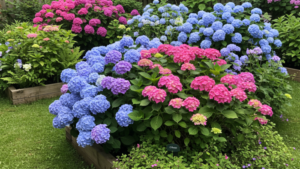
Hydrangeas are the true crown jewels of any garden, loved for their massive, colorful flower heads and lush green foliage. While they may look high-maintenance, these stunning shrubs are actually quite hardy once you know a few professional secrets. Whether you want deep blues, vibrant pinks, or classic whites, here is your ultimate guide! 🌿✨
🌡️ The Perfect Location: Shade and Sun
The word “Hydrangea” comes from the Greek hydor (water) and angos (vessel). This tells you everything you need to know about their thirst! 💧
- Light: Most hydrangeas prefer partial shade. Ideally, they should get the gentle morning sun and be protected from the harsh, scorching afternoon heat. 🌤️🚫
- Shelter: Choose a spot that is shielded from strong winds, which can dry out the large leaves and break the heavy flower stems.
🧪 The Soil and the “Color Magic”
One of the most fascinating things about hydrangeas (Hydrangea macrophylla) is that you can change their color by adjusting the soil pH! 🧪🌈
- Blue Flowers: Require acidic soil (pH 5.5 or lower). You can add pine needles, coffee grounds, or aluminum sulfate to achieve this. 💙
- Pink/Red Flowers: Require alkaline soil (pH 7.0 or higher). Adding garden lime can help you reach these rosy tones. 💗
- White Flowers: Their color is genetic and won’t change regardless of the soil pH. 🤍
💧 Watering: Keeping the “Vessel” Full
- Consistency is Key: Hydrangeas need plenty of water, especially during their first two years and during summer dry spells. 🌊
- Mulching: Apply a thick layer of organic mulch (bark or compost) around the base. This keeps the roots cool and helps the soil retain moisture much longer. 🍂
✂️ Pruning Without Mistakes
Pruning is where many gardeners get confused. The rule depends on the variety:
- Old Wood Bloomers: (e.g., Bigleaf or Oakleaf) Bloom on last year’s stems. Prune them immediately after flowering in late summer.
- New Wood Bloomers: (e.g., Panicle or Smooth) Bloom on new growth. Prune them in late winter or early spring before new leaves appear. ✂️🌿
🛡️ Feeding for Abundance
To encourage massive blooms, use a balanced slow-release fertilizer in early spring. Avoid over-fertilizing with nitrogen, as this will give you plenty of leaves but very few flowers! 🧪🌸
Leave a Reply