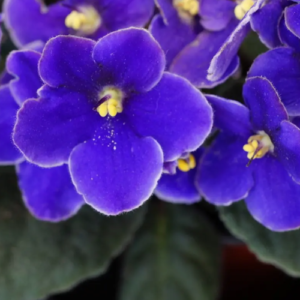
Indoor plants not only add color to our homes, but they are also known for their air-purifying properties. African violets, in particular, are loved for their purple, pink, red, and white flowers that steal the show.
Contrary to popular belief, African violets are actually pretty easy to grow and maintain. With the following 6 basic tips, you can ensure that your African violets look better than ever:
- Use potting soil: African violets require light, airy soil around their roots to allow for proper air circulation. Commercial potting soil or a mixture of peat moss and vermiculite or perlite can make the soil lighter.
- Provide optimal growing conditions: Direct sunlight can scorch the velvety leaves of African violets, so it’s best to place them in a bright location, preferably facing southeast. During winter, more light may be required for the plants to bloom. Contrary to popular belief, warmer temperatures won’t necessarily result in more blooms. African violets prefer temperatures between 12°C and 23°C (55°F and 75°F) and should be kept away from drafty areas or places where temperatures drop below 10°C and 12°C (50-55°F) at night.
- Indoor plants don’t just beautify our homes, they also purify the air. Among these plants are African violets, which not only filter the air but also put on a colorful display with their purple, pink, red, and white blooms. Contrary to popular belief, growing African violets is actually easy. In fact, with the following 6 basic tips, you can keep your African violets looking better than ever all year long:
- Use potting soil: African violets require light and airy soil for good air circulation. You can purchase commercial potting soil or create your own by blending soil with peat moss and vermiculite or perlite to lighten it up.
- Provide ideal growing conditions: African violets should not be exposed to direct sunlight as it can scorch their velvety leaves. Instead, place them in a well-lit spot facing southeast to receive indirect sunlight. During winter, you may need to give them more light to encourage flowering. Keep the temperature between 55°F and 75°F and avoid placing them in areas with drafts or temperatures that drop below 50-55°F at night.
- Keep the soil moist: Water your African violets as soon as the top of the soil becomes dry to the touch. Use room temperature or slightly warm water, and avoid getting water on the foliage. These plants thrive in moist environments but do not like being sprayed with water.
- Fertilize regularly: To promote regular blooming, it’s important to fertilize African violets frequently. Opt for fertilizers low in nitrogen and high in phosphorus to limit foliage growth and encourage flower production. You can choose from products specifically designed for African violets or use a high-quality, well-balanced fertilizer. Fertilize your plants with each watering for continuous blooming.
- Remove dry flowers: African violets can bloom all year round if cared for properly. One important tip is to remove dried flowers as soon as possible to stimulate the growth of new blooms.
- Repot periodically: After a while, the potting soil’s nutrients will become depleted, so it’s best to replace it every six to twelve months. Repot your African violet with new soil, but do not change the pot size and avoid using a pot larger than 4-5 inches in diameter. This will allow the plant’s roots to absorb nutrients and maintain healthy growth.
- Where to Place Your African Violet
- When it comes to planting African violets, it’s best to avoid direct sunlight. These plants can be easily damaged by the sun’s rays, so they require good light without the direct heat of the sun. It’s also important to keep them away from heat sources such as radiators, as African violets are tropical plants that require moisture. While they don’t require a lot of water, it’s important to water them regularly and moderately, taking care to avoid getting water on the leaves and flowers.
- During the spring and summer months, keep the soil slightly moist and ensure that water is draining properly. Adding liquid fertilizer for flowering plants about once a month can help to promote longer blooming periods. When watering, use room temperature water and consider placing the pot on a tray of clay balls with water to maintain humidity.
- During the fall and winter months, reduce watering to allow the soil to dry on the surface between waterings and avoid adding fertilizer.
- African violets can be susceptible to common houseplant diseases like red spiders, cochineal, aphids, and powdery mildew. If the leaves begin to wilt, it may indicate a lack of fertilizer, while smaller leaves could indicate the need to repot the plant.
- The African violet, also known as the Cape violet, was discovered in 1892 in the Tanzanian mountains by Baron Walter von Saint-Paul. Although it shares some similarities with the violet flower, African violets are a unique species all their own.
Leave a Reply