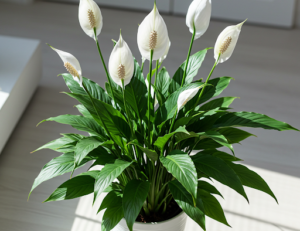
In 2026, the Peace Lily (Spathiphyllum) remains one of the most beloved houseplants for its elegant white spathes and air-purifying capabilities. 🌿 However, many owners find that their plant stops blooming after the initial purchase, especially during the colder months. The Peace Lily isn’t just a decoration; it is a sensitive biological filter that requires specific signals to produce its iconic white flowers. By adjusting light, humidity, and nutrition, you can trick this tropical beauty into blooming year-round. 📈✨🌸
The Biological Triggers for Winter Blooming 📝
Peace Lilies do not have a true “dormancy” period, but their metabolism slows down in winter. To keep them flowering, you must maintain their tropical momentum.
- The “Bright Shade” Rule: While they survive in low light, they will never bloom there. In winter, move your plant to a spot with intense but indirect sunlight. The plant needs this energy to fuel the biological shift from leaf production to flower formation. ☀️📊
- Temperature Stability: Peace Lilies are highly sensitive to drafts. Ensure they are kept in a room with a constant temperature between 18°C and 24°C. Cold air from windows is the #1 reason buds fail to develop. 🌡️🛡️
- The Maturity Factor: If your plant has never bloomed, it may be too young. A Peace Lily typically needs to be at least one year old with a well-established root system before it has the energy for reproduction. ⏳🌿
6 Golden Tips for Success 🛠️🏺
- Watering with Precision: Wait until the leaves just begin to “droop” slightly before watering. This mild biological stress can actually trigger a survival response—flowering. Use room-temperature, filtered water to avoid shocking the roots. 🚿🛡️
- Humidity Mimicry: These are rainforest plants. Mist the leaves daily or use a pebble tray to maintain 60% humidity. Dry winter air from heaters is a bloom-killer. 🌬️💦
- The Magnesium Boost: Once a month, add a pinch of Epsom salt to your water. The magnesium aids in chlorophyll production, giving the plant the biological strength to sustain white spathes. 🧪✨
- Sugar Power: In 2026, a popular hack is adding 1/2 teaspoon of sugar to 1 liter of water once every two months. This provides a quick carbohydrate boost for flower development. 🍭📉
- Clean Leaves, Better Energy: Dust acts as a barrier to photosynthesis. Gently wipe the leaves with a damp cloth every two weeks so the plant can absorb maximum light energy. 🧼🍃
- Avoid Over-Fertilizing: Too much nitrogen will give you giant green leaves but zero flowers. Switch to a phosphorus-rich fertilizer in late autumn to encourage bud formation. 🧪🚫🌿
Leave a Reply