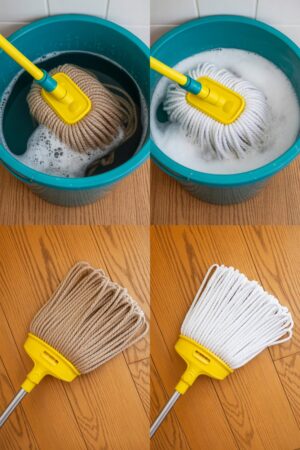
A mop may look harmless, but when it’s dirty, it becomes a breeding ground for germs and bacteria. If you want truly clean and disinfected floors, the mop itself must be washed after every use. Like any household tool, it requires regular care, hygiene, and proper cleaning.
Mops are popular because they are convenient and efficient—one pass is often enough to leave floors clean, shiny, and dry. However, if the mop head is contaminated, all that effort is wasted. Instead of cleaning your floor, you are simply spreading dirt around.
When to Clean, Reuse, or Replace a Mop
Many people assume that a heavily soiled mop should be thrown away and replaced. In most cases, this is unnecessary. A mop should only be discarded when it is completely worn out and can no longer be cleaned effectively—similar to old, ruined cleaning cloths.
If the mop is still in good condition, even if it looks very dirty, it can be restored using simple, natural, and inexpensive home remedies that have been used for generations.
Baking Soda: A Powerful and Natural Mop Cleaner
One of the most effective solutions for cleaning a mop is baking soda. This versatile ingredient is widely used in the kitchen, but it also works exceptionally well for sanitizing floor-cleaning tools.
To use it:
- Fill a bucket with warm water
- Add half a glass of baking soda
- Soak the mop head for 1–2 hours
After soaking, rinse thoroughly until the water runs clear.
If preferred, the mop can also be washed in a washing machine. Simply add baking soda to the detergent compartment and run a high-temperature cycle (around 70°C).
Vinegar and Lemon: Eliminating Bacteria and Odors
Vinegar is another excellent option. It breaks down dirt and neutralizes unpleasant odors caused by bacteria.
How to use it:
- Mix warm water with vinegar (about one cup per liter of water)
- Soak the mop for 30 minutes
- Wring it out and rinse well
For extra cleaning power, add two tablespoons of baking soda to the mixture. This combination enhances both degreasing and disinfecting effects.
Lemon is also highly effective. Its natural acidity removes grime, kills germs, and leaves a fresh scent.
- Mix water with the juice of two lemons
- Soak the mop for about one hour
- Rinse thoroughly
Ammonia and Tea Tree Oil: For Deep and Intensive Cleaning
When a mop is extremely dirty, water mixed with a small amount of ammonia can restore it surprisingly well. After soaking, it is essential to rinse the mop very thoroughly and allow it to dry completely before storing it. Storing a damp mop can lead to persistent bad odors.
Another natural alternative is tea tree oil, known for its strong antibacterial properties. It effectively cleans the mop and neutralizes unpleasant smells.
- Fill a container with warm water
- Add lemon juice and a few drops of tea tree oil
- Soak the mop for 30 minutes
- Rinse well
The result is a mop that looks and smells almost new.
Why These Methods Work
All of these remedies have several advantages:
- Very low cost or completely free
- Environmentally friendly
- Safe for floors when properly rinsed
- No harsh chemicals or damage
With these simple techniques, there is usually no need to buy a new mop. A little care is enough to keep it clean, hygienic, and ready for use.
Leave a Reply