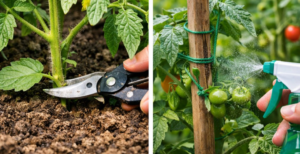
Success in the tomato garden is won or lost in June. During this stage, the plant is at its most vulnerable to nutrient deficiencies and environmental stress. If the soil dries out too much or if the plant lacks specific micronutrients, the yellow blossoms will simply fall off. To prevent this and guarantee a record-breaking harvest, you must adjust your feeding, watering, and pruning habits immediately.
Essential June Care for Maximum Yield
1. Shift the Nutritional Balance
In May, your plants needed nitrogen for green growth. In June, they need Potassium (K) and Phosphorus (P).
- Why: Potassium is the fuel for fruit development and sugar production.
- The Trick: Use a fertilizer with a higher “middle and last” number (N-P-K), or use organic wood ash tea, which is naturally rich in potassium. 🧪📈
2. The Boron Secret
Many gardeners overlook Boron, a micronutrient vital for pollen germination and fruit set.
- The Recipe: Dissolve 2 grams of Boric Acid in 10 liters of water. Spray this solution on the leaves and flowers once during the peak flowering period. This ensures that almost 100% of the flowers turn into fruit. ✨🌸
3. Smart Watering to Prevent Rot
June heat can lead to “Blossom End Rot” (black leathery spots on the bottom of the fruit). This isn’t a disease; it’s a calcium deficiency caused by irregular watering.
- The Solution: Keep the soil consistently moist—never let it go from “bone dry” to “soaking wet.” Use mulch (straw or hay) to keep the roots cool and the moisture levels stable. 💧🛡️
4. Strategic Pruning and Airflow
By June, tomato bushes can become overgrown.
- Action: Remove the “suckers” (side shoots) that steal energy. Also, trim the bottom leaves that touch the ground to prevent soil-borne diseases from splashing onto the plant. This improves airflow, which helps with natural pollination. ✂️🌬️
A Pro Tip for Pollination
If it’s very hot and there’s no wind, the pollen can become sticky and fail to drop. Every morning, give the main stem of your tomato plant a gentle shake. This mimics the “buzz pollination” of bees and ensures the fruit sets properly even in stagnant air.
Leave a Reply