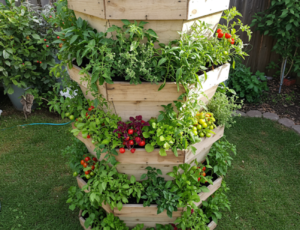
A vegetable tower is essentially a vertical garden that uses height rather than width to house plants. By stacking growing layers or using a perforated central tube, you can grow up to 30–40 plants in the space normally occupied by just three. This method not only saves room but also creates a more controlled environment where watering is more efficient and pests are easier to manage.
The Advantages of Vertical Towers
1. Massive Space Efficiency
By growing “up,” you can harvest a significant amount of food from a tiny balcony. It is the ultimate solution for urban dwellers who want to be more self-sufficient without owning a large plot of land. 🏗️🌿
2. Water Conservation
Many vegetable tower designs feature a central core or a “trickle-down” system. When you water the top, the moisture travels down through every layer, ensuring that no water is wasted on empty soil. 💧📉
3. Fewer Pests and Better Airflow
Because the plants are elevated, they are less accessible to ground-dwelling pests like slugs and snails. Furthermore, the vertical structure allows air to circulate freely around every plant, drastically reducing the risk of fungal diseases. 🌬️🛡️
How to Build a Simple DIY Vegetable Tower
Materials Needed:
- A large PVC pipe (15-20 cm diameter) or stacked recycled buckets.
- A drill with a hole-saw attachment.
- High-quality potting soil mixed with compost.
- A smaller, perforated inner pipe (for irrigation).
Step-by-Step Instructions:
- Preparation: If using a large PVC pipe, mark the spots where you want your plants to emerge. Space them about 15–20 cm apart in a staggered pattern.
- Cutting the Pockets: Use a drill to cut holes. If using PVC, you can heat the plastic slightly with a heat gun and pull the top of the hole outward to create a “pocket” or “lip” for the plant. 🛠️
- The Irrigation Core: Place a smaller, thinner pipe (with tiny holes drilled all over it) down the center of the tower. Wrap this inner pipe in landscape fabric to prevent soil from clogging the holes. This ensures water reaches the bottom plants. 🚿
- Filling: Stand the tower in a heavy base (like a large pot filled with stones for stability). Fill the space between the inner and outer pipes with nutrient-rich soil.
- Planting: Insert your seedlings (strawberries, herbs, lettuce, or even small peppers) into the holes. Pack the soil firmly around them. 🏺🌱
Best Plants for Your Tower
- Leafy Greens: Lettuce, spinach, and kale thrive in these structures.
- Herbs: Basil, parsley, cilantro, and mint.
- Fruit: Strawberries are the most popular choice for towers.
- Small Root Veggies: Radishes can be grown easily in the side pockets.
Leave a Reply