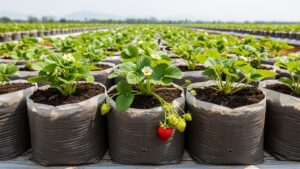
Strawberries are among the most beloved fruits thanks to their sweet taste, freshness, and versatility in cooking. Growing strawberries at home may seem complicated, especially in small spaces, but the soil bag method makes it possible to achieve abundant and regular production, even on a balcony, terrace, or in a tiny garden. This innovative technique allows you to control soil quality, simplify maintenance, and maximize yield.
Why Choose Soil Bags for Strawberries?
Growing strawberries in soil bags offers many advantages over traditional methods:
- Space saving — even a small balcony can become a mini strawberry farm.
- Optimal drainage — bags help excess water escape, reducing the risk of root rot.
- Fertility control — it’s easy to enrich the substrate according to the plants’ needs.
- Fewer diseases and pests — better aeration and less contact with soil-borne problems.
- Easier harvesting — no need to bend over or dig; picking is quick and practical.
Using recycled bags (from flour, rice, etc.) also makes the method economical and ecological.
Choosing the Right Strawberry Varieties
Opt for remontant (everbearing) varieties that produce multiple harvests per year. Plants from specialized nurseries are ideal for quick results. You can also grow from seeds, but this requires more patience.
Preparing the Bags and Substrate
Choose strong bags with a capacity of 20 to 50 liters. Make holes at the bottom and on the lower sides for good drainage.
Prepare a rich, light substrate:
- 50% garden soil
- 30% well-decomposed compost
- 20% coarse sand
Fill the bottom of the bag with 10–15 cm of substrate before planting.
Planting the Strawberries
Place 2 to 3 plants per bag, depending on size and variety. Plant so that the crown is level with the soil surface — do not bury the neck to avoid rot. Gently firm the soil and water immediately after planting.
Light and Exposure
Strawberries need plenty of light to produce sweet, abundant fruit. Place the bags in a spot that receives at least 6 hours of sun per day. In very hot climates, provide light shade during the hottest hours.
Watering and Maintenance
Keep the substrate moist but never waterlogged. Water regularly, especially during fruit formation. Remove faded leaves and monitor for pests like aphids or slugs. Ensure good air circulation between bags to prevent fungal diseases.
Fertilization
Fertilize every 2 to 3 weeks with organic liquid fertilizer or nettle manure. Before flowering and during fruiting, favor nutrients rich in potassium and phosphorus for better taste and larger berries. Avoid excess nitrogen.
Flowering and Pollination
Flowers usually appear 4 to 6 weeks after planting. Natural pollination by bees is best, but you can hand-pollinate with a small brush if necessary.
Harvesting
Pick strawberries when they are fully red and fragrant. Harvest regularly every 2–3 days in hot weather.
Advantages of Growing in Soil Bags
- Higher productivity thanks to optimal substrate and drainage
- Easy to move to follow the sun or protect from bad weather
- Economical and ecological
- Perfect for small spaces like balconies and terraces
Conclusion
Growing strawberries in soil bags is an effective, simple, and accessible method for obtaining abundant and regular harvests. Even in limited spaces, you can create your own little urban orchard and enjoy fresh, delicious strawberries.
Combine good substrate, regular watering, sunny location, and proper fertilization — and you’ll have sweet strawberries for a long time!
Leave a Reply