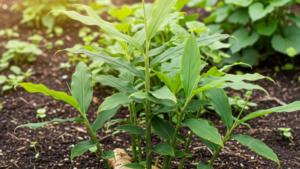
You don’t need to buy ginger roots every time! With this simple and sustainable method, you can grow fresh, aromatic ginger at home using kitchen scraps. It’s perfect for small spaces, balconies, or even windowsills, and once started, it becomes a continuous cycle of harvest and replanting.
Why Grow Ginger from Kitchen Scraps?
- Almost zero cost
- Fresher and more flavorful than store-bought
- Rich in active compounds
- Beautiful tropical plant that purifies the air
- Sustainable and zero-waste
Step-by-Step Guide
1. Choose the Right Ginger Select organic ginger from the kitchen. Look for pieces with visible small buds (eyes). Avoid very dry or shriveled roots.
2. Preparation
- Cut the ginger into pieces of 4–6 cm, ensuring each piece has at least one bud.
- Let the cut pieces dry for a few hours or overnight so the cut surface forms a protective layer.
3. Planting
- Fill a wide, shallow pot (at least 20–30 cm diameter) with rich, well-draining soil mixed with compost.
- Place the ginger pieces horizontally on the soil, buds facing upward.
- Cover lightly with 3–5 cm of soil.
- Water gently to moisten the soil.
4. Location and Care
- Place in a warm spot with bright indirect light.
- Keep the soil consistently moist but not soggy.
- Mist the leaves occasionally for higher humidity.
- Fertilize every 3–4 weeks with organic compost tea or a balanced liquid fertilizer during the growing season.
Harvesting and Sustainability
- You can start harvesting small pieces after 3–4 months by gently digging around the edges.
- Always leave some roots in the pot so the plant continues growing.
- After 8–10 months, you can harvest the full root and replant new pieces to keep the cycle going.
Conclusion
Growing ginger from kitchen scraps is one of the easiest and most sustainable ways to have a constant supply of fresh ginger at home. With minimal effort and the right conditions, you can enjoy an abundant harvest while creating a beautiful green corner in your house.
Start today with a piece of ginger you would normally throw away — in a few months, you’ll have your own ginger plant producing for years!
Leave a Reply