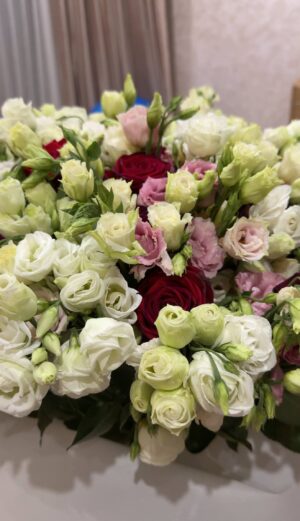
Receiving a beautiful bouquet as a gift is always a pleasure. Flowers bring a festive atmosphere, coziness, and a wonderful scent to your home. However, it often happens that after just a few days, the arrangement loses its appeal and wilts.
To keep your flowers pleasing to the eye for as long as possible, you simply need to follow a few straightforward but highly effective home care rules.
1. Perfect Vase Cleanliness
Bacteria are the main enemy of cut flowers. They multiply quickly in the water, clog the pores of the stem, and prevent the plant from drinking.
- Wash the vase thoroughly: Before putting the flowers in, wash the vase with soap or dishwashing liquid.
- Choose the right material: Glass or ceramic vases are best. Water stagnates faster in plastic or metal containers.
2. Proper Stem Cutting
Never put a bouquet in water immediately after bringing it inside, especially if the flowers have been without water for a long time. The cut dries out, and the flower won’t be able to absorb moisture.
- Sharp instrument: Use a sharp knife or floral pruning shears. Ordinary office scissors crush the capillaries of the stem, blocking access to water.
- 45-degree angle: Make a slanted cut. This increases the surface area for water absorption.
- Cut under water: It is best to make the cut under running water or in a bowl of water to prevent air bubbles from entering the capillaries.
3. Removing Excess Leaves
- Remove lower leaves: Any leaves that will be underwater in the vase must be removed. If you don’t do this, they will start to rot, leading to rapid bacterial growth and an unpleasant odor.
- Thorns on roses: If you remove thorns, do it carefully so as not to damage the skin of the stem, otherwise, an infection can get in.
4. Water and Nutrients
Fresh water is the key to a bouquet’s longevity.
- Temperature: Most flowers prefer room temperature water. An exception is spring flowers (tulips, daffodils, irises), which love cold water (you can even add a couple of ice cubes).
- Regular replacement: Change the water every day or at least every other day. With each water change, be sure to trim the stem by 1-2 centimeters and rinse the vase.
- Feeding: The best option is to add a special floral food powder (like “Chrysal”) to the water, which is often provided in flower shops. It contains nutrients and an antiseptic.
Folk hack: If you don’t have a special powder, you can add half an aspirin tablet (as an antiseptic) or a pinch of citric acid with a teaspoon of sugar to the water.
5. The Ideal Location for the Bouquet
The place where the vase stands matters greatly for the lifespan of the flowers.
- Avoid direct sunlight: Flowers will quickly wilt from overheating.
- Beware of drafts and heat: Do not place the bouquet near air conditioners, fans, heaters, or radiators.
- Keep away from fruit: Ripe fruit (especially bananas and apples) release ethylene gas, which accelerates aging and petal drop.
Quick Tips for Popular Flowers:
| Flower Type | Care Specifics |
| Roses | Love a lot of water (the vase should be 2/3 full). It is best to make the slanted cut as long as possible. |
| Tulips | Continue to grow in the vase. Love very cold water (pour just a little, about 5-7 cm, and regularly add fresh water). |
| Chrysanthemums | Very resilient. It is better to snap or break the stems rather than cut them with a knife. Be sure to remove all lower leaves. |
| Hydrangeas | Drink a massive amount of water. Love deep vases. If the bloom starts to wilt, you can submerge the “head” itself in cold water for 15-20 minutes. |
By devoting just a few minutes a day to your bouquet, you can significantly extend its life and enjoy its beauty for much longer!
Leave a Reply