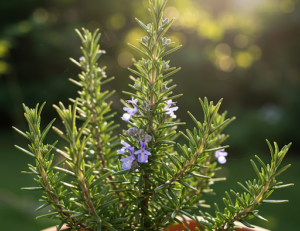
Rosemary is one of the most useful aromatic plants in the kitchen and garden. Instead of buying new plants, you can easily multiply your rosemary using cuttings. The secret of this simple and highly effective method lies in one single natural ingredient: honey. Honey acts as a powerful natural rooting hormone, protects the cutting from bacteria, and significantly increases the success rate.
Why Honey Works So Well
- It contains natural enzymes and antibacterial properties
- It helps prevent rot during rooting
- It stimulates root formation
- It is 100% natural and safe for plants
Step-by-Step Propagation Method
Best time: Spring or early autumn
Materials needed:
- Healthy rosemary stems
- Pure honey (raw honey is best)
- Sharp, clean scissors
- Small pots with light, well-draining soil (or perlite/sand mix)
- Spray bottle with water
Instructions:
- Take cuttings Cut 10–15 cm long semi-woody stems from a healthy rosemary plant. Choose stems that are not flowering.
- Prepare the cuttings Remove the lower leaves, leaving only the top 4–5 leaves. Make a clean cut just below a node.
- Apply honey Dip the bottom 2–3 cm of the cutting in a little honey. Make sure the cut end is well coated.
- Plant the cuttings Plant the honey-coated end into moist, well-draining soil or perlite. Gently firm the soil around the stem.
- Create humidity Spray the leaves lightly with water and cover the pot with a transparent plastic bag or cut bottle to maintain high humidity. Place in a bright spot with indirect light.
Care During Rooting
- Keep the soil slightly moist (not soggy).
- Ventilate the mini-greenhouse every 2–3 days.
- Roots usually appear in 2 to 4 weeks.
- Once well rooted, remove the plastic cover and gradually acclimate the young plant to normal conditions.
Conclusion
Using honey to propagate rosemary is an incredibly simple, natural, and effective method. One healthy mother plant can give you dozens of new rosemary plants for free. In just a few weeks, you’ll have strong, aromatic rosemary ready to use in your kitchen or garden.
Try this trick the next time you prune your rosemary — you’ll be amazed by the results!
Leave a Reply