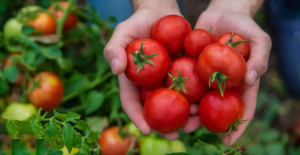
Every gardener dreams of heavy clusters of juicy, red tomatoes, but often the plant spends too much energy growing leaves and “suckers” instead of fruit. By redirecting the plant’s resources and providing a specific natural boost, you can ensure that your tomatoes grow larger, ripen faster, and produce significantly more per vine.
Why This Method Boosts Production
1. Energy Redirection
Tomato plants often produce “suckers”—small shoots that grow in the “armpit” between the main stem and a leaf branch. If left alone, these turn into new stems that drain the plant’s energy. Removing them forces the plant to focus all its nutrients on the developing fruit. ✂️🌿
2. Improved Airflow and Light
By thinning out unnecessary foliage, especially at the bottom of the plant, you improve air circulation. This reduces the risk of fungal diseases like blight and allows more sunlight to reach the fruit, speeding up the ripening process. ☀️🌬️
3. Nutrient Concentration
When combined with a natural potassium boost (like wood ash or banana peel tea), the plant has exactly what it needs during the flowering stage to prevent blossom drop and maximize fruit size. 🧪📈
How to Apply the 30 Percent Yield Trick
Step 1: Identify and Remove “Suckers”
Check the junctions between the main vertical stem and the horizontal branches. When you see a small sprout growing at a 45-degree angle, pinch it off with your fingers. Do this weekly to keep the plant under control.
Step 2: The “Bottom Clean-Up”
Once the first cluster of fruit has set, remove all the leaves from the main stem up to that cluster. This prevents soil-borne diseases from splashing onto the leaves and directs all energy upward. 🛡️
Step 3: The Natural Fertilizer Boost
To support the extra fruit production, provide a “potassium tea” every 2 weeks:
- Recipe: Soak 2-3 banana peels in a jar of water for 48 hours.
- Application: Pour this liquid at the base of the plant. Potassium is the key mineral for fruit development and sugar content. 🍌💧
Step 4: Consistent Watering
To prevent tomatoes from cracking or developing blossom end rot, water consistently at the base of the plant. Never wet the leaves, as this invites disease.
Leave a Reply