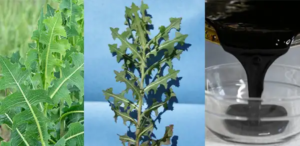
Throughout history, our ancestors have drawn on nature’s gifts, not only to satisfy their culinary cravings, but also to harness the incredible healing potential that many wild plants offer. Lactuca serriola, commonly known as prickly lettuce, is one such remarkable wild medicinal herb that thrives in diverse ecosystems and provides a plethora of therapeutic benefits. In this article we delve into the world of Lactuca serriola and reveal the virtues that it brings to our well-being.
Discover prickly lettuce
Lactuca serriola belongs to the Asteraceae family and is closely related to the garden lettuce (Lactuca sativa). However, their distinctive feature is the serrated, spiny leaves that distinguish them from their cultivated counterparts. This hardy wild herb occurs in large quantities in various regions and often lurks on field edges, roadsides and in fallow areas.
In the traditions of rural communities, prickly lettuce has earned its reputation as a “first aid remedy”, with the saying repeated over generations that “the way to prickly lettuce is shorter than to the doctor’s office.” Even though it is important To emphasize that prickly lettuce is not a substitute for professional medical care, its natural healing properties should not be underestimated. We will highlight some of them below.
The healing properties of prickly lettuce
Lactuca serriola is a veritable storehouse of beneficial compounds, including flavonoids, iridoids, mucilage, tannins and essential minerals. These components give it numerous health benefits and make it a valuable addition to your natural remedy arsenal.
- Relaxing and expectorant effects: Prickly lettuce is known for its calming and expectorant effects, which can relieve breathing difficulties and coughs.
- Toning mucous membranes: It has the ability to tone mucous membranes, making it a valuable ally in treating problems related to these delicate tissues.
- Antispasmodic properties: Prickly lettuce exhibits antispasmodic properties and is therefore useful in relieving muscle spasms and spasms.
- Anticatarrhal Effect: It can help relieve catarrh, a common symptom of respiratory diseases, by promoting the excretion of mucus.
- Healing and hemostatic effects: The hemostatic properties of prickly lettuce can help control bleeding and support the healing process.
Ways to use prickly lettuce
Using the potential of Lactuca serriola is easy and versatile. Here are some ways you can incorporate it into your health and wellness routine:
1. Tincture:
Ingredients:
- Fresh or dried spiny lettuce leaves
- High-proof alcohol (e.g. vodka or grain alcohol)
Instructions:
- Start by harvesting fresh prickly lettuce leaves if available. Alternatively, you can also use dried leaves.
- Chop or crush the leaves to expose their surface. Fresh leaves are preferably used for tinctures, but dried leaves can also be used effectively.
- Place the shredded leaves in a clean, airtight glass jar.
- Pour enough high-proof alcohol over the leaves to completely cover them. Make sure the alcohol used is at least 40% alcohol by volume (80% alcohol).
- Close the jar tightly and shake it gently.
- Store the jar in a cool, dark place for about 2-4 weeks. Shake the jar daily to agitate the mixture.
- After the steeping time, strain the liquid through a fine-mesh sieve or cheesecloth into a clean, dark glass bottle.
- Your prickly lettuce tincture is ready to use. Take 3-5 ml (about 60 drops or 1 teaspoon) of the tincture three times a day to combat conditions such as catarrh, gastritis or irritable bowel syndrome.
2. Juice:
Ingredients:
- Dried spiny lettuce leaves
- Water
Instructions:
- Start by drying the prickly lettuce leaves. This can be achieved by laying them out in a single layer on a clean, dry surface out of direct sunlight until completely dry.
- Once the leaves are dry, grind them into a fine powder using a mortar and pestle or a clean coffee grinder.
- To make the juice, take 2 teaspoons of the dried leaf powder and mix it with a small amount of water to form a paste.
- Gradually add more water while stirring until you get a juice-like consistency.
- Consume 2 teaspoons of prickly lettuce juice three times a day to treat conditions such as cystitis, diarrhea and lung infections. Apply the wound care juice externally to the affected area to develop its healing properties.
3. Infusion:
Ingredients:
- Fresh prickly lettuce leaves
- Boiling water
Instructions:
- Harvest fresh prickly lettuce leaves, ensuring they are clean and free of contaminants.
- Bring water to the boil and let it cool slightly.
- Place a handful of fresh lettuce leaves in a teapot or heatproof container.
- Pour enough hot water over the leaves to completely cover them.
- Cover the container and let it steep for about 10-15 minutes.
- Strain the infusion into a cup.
- Drink a cup of prickly lettuce infusion three times a day to combat mucus. This infusion can also be used as a gargle to relieve a sore throat.
4. Syrup:
Ingredients:
- 225 grams of sugar
- 300 ml of prickly lettuce infusion (prepared as described in the infusion section)
Instructions:
- Prepare the infusion of prickly lettuce as described above.
- While the infusion is still warm, mix it with 225 grams of sugar until the sugar is completely dissolved.
- Once the mixture has cooled, store it in a clean, airtight bottle.
- Take 5 ml (1 teaspoon) of the prickly lettuce syrup to relieve sore throat and cough.
5. Envelopes:
Ingredients:
- Fresh green spiny lettuce leaves
Instructions:
- Harvest fresh green lettuce leaves, making sure they are clean and free of contaminants.
- Using a mortar and pestle or a clean food processor, grind the leaves to a paste-like consistency.
- Apply the resulting paste directly to wounds that are slow to heal or to treat chronic ulcers.
- For insect bites, apply the poultice to the affected area to relieve the discomfort.
Now that you are familiar with the remarkable properties of Lactuca serriola, the next time you encounter this wild wonder near you, consider picking some and harnessing nature’s gifts for your well-being. Remember that although prickly lettuce can be a valuable natural remedy, if you have serious health problems, it is essential to consult a doctor.
Do you like that? Share inspiration with your friends!
Leave a Reply