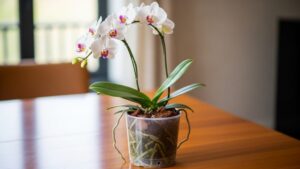
Orchids, especially the popular Phalaenopsis, are not typical houseplants that grow in dense soil. In their natural habitat, they are epiphytes, meaning they grow on trees with their roots exposed to the air and light. 🌳 Many enthusiasts struggle to keep them blooming, but the secret often lies in the type of container used. Moving your orchids into clear plastic containers is one of the most effective ways to ensure they stay healthy and flower almost permanently. 🌸✨
The Biological Secret: Root Photosynthesis 📝
Unlike most plants, the roots of an orchid do more than just anchor the plant and drink water; they also perform photosynthesis. 🧪🍃
- Light Exposure: In a traditional ceramic or opaque pot, the roots are kept in total darkness. By using transparent plastic, sunlight reaches the roots, allowing them to produce energy. This extra energy boost is what the plant uses to push out new flower spikes rather than just surviving. ☀️📉
- Monitoring Root Health: Clear containers allow you to see the roots at all times. Healthy orchid roots should be thick and firm. If they turn silver or grey, the plant is thirsty. If they are vibrant green, the plant has enough water. 🔍🌿
- Visual Moisture Control: You can see the condensation inside a plastic pot. If you see water droplets on the walls, there is no need to water. This prevents the #1 orchid killer: overwatering. 💧🚫
How to Prepare the Perfect Plastic Environment 🛠️
A standard plastic pot from a shop is often not enough. To achieve professional results, you should customize the container:
- Lateral Ventilation: Using a soldering iron or a heated metal skewer, poke several holes in the sides of the plastic container, not just the bottom. This allows air to circulate around the roots, mimicking the breezes they experience in the jungle. 🌬️🌀
- The Substrate Choice: Never use regular potting soil. Use a mix of pine bark, expanded clay, and a little sphagnum moss. This chunky mix allows light and air to penetrate deep into the container. 🏺🪵
- The “Double Pot” Strategy: If you dislike the look of plastic, you can place the clear plastic container inside a larger decorative ceramic pot. However, you must remove the plastic pot for a few hours every day or during watering to let the roots “breathe” and see the light. 🏺✨
Maintenance Tips for Continuous Blooms 💡
- The Temperature Drop: Even in a plastic pot, an orchid needs a “trigger” to bloom. Try placing it in a slightly cooler spot (around $15\text{–}16^{\circ}\text{C}$) at night for two weeks. The combination of root light and the temperature drop will stimulate a new flower spike. 📉🌡️
- Proper Watering: Instead of pouring water from the top, immerse the plastic container in a basin of water for 15 minutes. The clear walls will allow you to see the roots turn from silver back to green, confirming the plant is hydrated. 🚿✅
- Avoid Root Rot: The transparent walls make it easy to spot the first signs of root rot (brown or mushy roots). If you see this, you can immediately reduce watering before the plant dies. 🛡️🥀
Leave a Reply