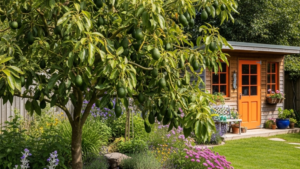
Practical guide to growing avocados in your garden with ease. 🌱
Growing an avocado tree in your garden may seem like a complex and lengthy project, but with the right approach, it is surprisingly simple and extremely rewarding. Avocados not only provide delicious fruits rich in healthy fats, but the trees themselves are attractive, with their shiny green leaves that add a tropical touch to any garden. 🍃
Even if you have never grown fruit trees before, this practical guide will explain everything you need to know to grow avocado trees in your garden with minimal hassle. ✨
1. Choose the Variety Adapted to Your Climate
The first step is to choose an avocado variety suited to your growing zone. There are three main types of avocados:
- Mexican – Tolerates cold down to -6°C; smaller fruits, ideal for cooler climates.
- Guatemalan – Moderate cold tolerance; large fruits with thick skin.
- West Indian – Ideal for tropical climates; sensitive to cold.
If you live in USDA zones 9 to 11 (such as parts of California, Florida, or Texas), you can grow many avocado varieties outdoors. For slightly cooler zones, consider hardy Mexican varieties or grow them in containers that can be brought indoors during winter. ❄️
2. Use a Grafted Tree for Faster Results
Although it is possible to grow an avocado tree from a pit, this method is not recommended if you want to harvest fruits in the coming years. Trees grown from seeds can take 8 to 10 years to produce fruits, and the quality is not guaranteed.
Instead, buy a grafted avocado tree from a local nursery. These are young trees grafted onto a robust rootstock that can produce fruits in just 2 to 4 years. 🌳
3. Find the Ideal Planting Location
Avocado trees love heat, sun, and well-drained soil. Choose a sunny location with at least 6 to 8 hours of direct sunlight per day. Avoid planting them in low areas where cold air or water can stagnate.
For planting directly in the ground:
- Make sure the soil is well-drained — avocado trees do not like stagnant water.
- Incorporate compost or organic matter to improve soil structure.
- Create a mound or raised bed if the area is prone to moisture.
For container planting:
- Choose a pot at least 20 to 24 inches wide.
- Use a light potting mix with sand or perlite for drainage.
- Ensure the container has plenty of drainage holes. 🪴
4. Planting and Watering
When planting your avocado tree:
- Dig a hole twice as wide as the root ball, but not deeper.
- Gently place the tree in the hole and fill it with soil, making sure the top of the root ball is level with the ground.
- Water generously after planting to encourage rooting.
Young avocado trees need regular watering, especially during the first year. Water deeply once or twice a week, allowing the soil to dry slightly between waterings. Overwatering is a common mistake — always check soil moisture before watering again. 💧
5. Fertilization and Mulching
To promote healthy growth, apply a balanced fertilizer (such as 10-10-10) during the growing season, every 4 to 6 weeks in spring and summer. As the tree grows, you can use a fertilizer specific for citrus or avocado trees.
Cover the base of the tree with organic mulch such as bark or straw, leaving a few centimeters of space around the trunk to avoid rot. Mulch helps retain soil moisture, limit weed growth, and regulate temperature. 🌾
6. Pruning and Maintenance
Avocado trees do not require heavy pruning, but light maintenance helps give the tree a nice shape and improves air circulation. Remove:
- Dead or crossing branches
- Water sprouts (vigorous shoots from the base)
- Low branches if you want a taller tree
In windy areas, staking young trees can help prevent breakage. ✂️
7. Pollination and Fruit Production
Most avocado varieties are self-fertile, meaning a single tree can produce fruits. However, having a second tree of a complementary variety (Type A or B) can significantly increase the yield.
Don’t worry if your young tree drops flowers or small fruits in the first year — this is normal as it acclimates. Be patient, fruit production will improve over time. 🌸
8. When and How to Harvest
Avocados do not ripen on the tree. They ripen after picking. Depending on the variety, it takes 6 to 12 months between flowering and fruit maturity.
To test readiness:
- Pick one avocado and let it sit at room temperature.
- If it softens in 7 to 10 days, the rest are ready to harvest.
Use pruning shears to cut the fruits from the branch, leaving a small stem attached. 🍏
Final Thoughts
With a suitable location, proper care, and a little patience, growing avocado trees in your garden is easier than you might think. Start with a grafted tree, water moderately, give it sun and warmth, and let nature do the rest.
In just a few seasons, you could be harvesting creamy avocados straight from your own tree, without needing to go to the store! 🥑✨
Leave a Reply