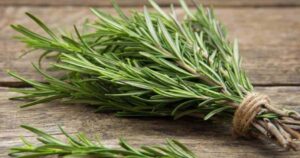
There’s a trick to multiply rosemary and have it always on hand indefinitely, year after year.
During our lunches and dinners, we often flavor our dishes with aromatic herbs that make our meals more savory and fragrant. We have many options available — from parsley to thyme, bay leaf, sage, and many others — but one of the most popular, especially with chicken and potatoes, is rosemary.
Rosemary – Characteristics
Rosemary (Rosmarinus officinalis) grows spontaneously in the Mediterranean climate along the Tyrrhenian and Ionian coasts and is very widespread throughout the peninsula, particularly from the Adriatic coasts to Molise and the regions bordering Lake Garda.
The plant is evergreen and can reach a height of about 50 to 300 cm, with long, persistent leaves of 2 to 3 cm that release a particular and characteristic scent. It needs to be placed in sunny areas (not cold ones), as it doesn’t tolerate rain or harsh winter climates. If kept on a balcony, it should be grown in soil mixed with sand.
How to Multiply Rosemary
Multiplication can be done by cuttings — taking a piece of the mother plant and regenerating it in soil to create a new plant.
Thanks to this method, you can get more rosemary plants by multiplying them infinitely without buying new ones from a store. Plants grown from cuttings mature faster than those grown from seed (rosemary seeds have quite long germination times). A rosemary plant obtained from a cutting will reach a useful size after just a few months.
This is very important because the clone plant will be identical to the mother plant — same flavor, same characteristics, same resistance, and same fragrance.
The Cutting Technique (Bouturage)
Removing a piece from the main plant doesn’t damage it at all. You can fill your balcony or windowsill with as many clone plants as you want.
For best results:
- Cut young, green, and fresh stems, usually from the base of the plant.
- Avoid older, brown, woody stems (they are harder to root).
- Use very sharp scissors.
- The chosen stem should be at least 10 cm long.
- It’s better to take more than one in case some don’t root well.
Steps:
- Remove the lower rosemary needles from the cutting.
- Place it in warm water in a warm spot (avoid direct sunlight).
- Change the water every two days.
- After about 4 to 8 weeks, if the cutting has survived, you’ll see roots forming.
- Transplant into a larger pot with sandy soil. Make a hole and insert the cutting.
- Place it in direct light for at least 6–8 hours a day.
Once the plant has grown to about 15 cm, you can use it and take new cuttings from it to generate more plants (but never harvest more than 1/3 of the plant at once, as rosemary grows slowly).
If the cutting turns brownish and the needles come off easily, it means it didn’t survive — simply take another one.
With this simple and completely free method, you can have an endless supply of fresh rosemary!
Leave a Reply