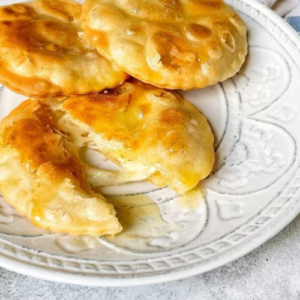
Seadas, or sebadas, are fried ravioli-shaped sweets typical of Sardinian cuisine, a true sweet symbol of regional pastry. Enjoyed by locals and tourists alike, they consist of a crumbly sheet of semolina which contains a savory filling made from fresh Sardinian pecorino, and traditionally they are served hot with chestnut or arbutus honey, a local honey from dark color with a slight bitter taste.
To make them at home you will have to make a thin sheet of semolina flour, lard and water from which to obtain small disks to fill, paired two by two, with the pecorino melted in a pan and flavored with lemon zest . Once you get the dumplings, all you have to do is fry them in plenty of seed oil until golden brown.
The real strength of these Sardinian pancakes is the filling, halfway between sweet and salty, in which the fresh and slightly tart flavor of the cheese contrasts pleasantly with the citrus flavor of the lemon zest, for an incredibly aromatic result. and tasty.
Typical of northern Ogliastra and Barbagia, seadas are now prepared throughout the region, and particularly in areas with a stronger pastoral vocation. They are also called differently – seada, in the singular, but also sebada, sabada, sevada, seatta – depending on the area considered, even if all the names seem to derive from the Sardinian term seu, which means “fat” and in all probability made reference to lard, an animal fat still used in dough today.
Discover how to prepare seadas following the procedure and advice step by step: delicious and with a tender and stringy heart, they are perfect for delighting friends and loved ones during a dinner based on typical products, after having tasted culurgionis, malloreddus alla campidanese and carasau bread. Other regional desserts also try Sardinian zeppole, Sardinian beignets and pardulas.
Ingredients
FOR THE PASTRY
SEMOLINA FLOUR
360g
CASCADE
150g
LARD
70g
SALT
3 grams
FOR THE FILLING
FRESH PECORINO SARD
500 g
LEMON ZEST)
1
FRY
PEANUT OIL
to taste
TO GARNISH
ARBUTUS HONEY
to taste
How to prepare seadas (sebadas)
Step 1
Start making the seadas by placing the semolina flour in a large bowl, then pour in the warm water in which you dissolved the salt
1
.
Step 2
Knead briefly, by hand or with a planetary mixer, until the flour has completely absorbed the water. Then add the lard, one piece at a time
2
, and coat well.
Step 3
Continue kneading until you get a smooth, soft, non-sticky dough
3
, then wrap it in cling film and let it rest in the fridge for 20 minutes. Do not skip this step: the dough must rest so that it becomes more elastic and easier to spread and work.
Step 4
Meanwhile, cut the fresh pecorino into small cubes
4
.
Step 5
Transfer to a nonstick skillet and melt over very low heat, stirring constantly with a wooden spoon. When completely melted, flavor it with grated lemon zest
5
.
Step 6
At this point, pour the melted pecorino onto a sheet of parchment paper and spread well using a spoon
6
.
Step 7 Make discs with a 7
cm diameter cookie cutter and keep aside.
Step 8
Now roll out the dough on a lightly floured work surface until you get a thin sheet, about 3-5 mm thick, then cut out discs using, in this case, a pastry circle 10 cm in diameter.
8
.
Step 9
Arrange the pecorino on half of the discs
9
.
Step 10
Close with another disc of puff pastry, sealing the edges well with your fingers, then finish them with a notched wheel
ten
.
Step 11
Heat the peanut oil abundantly in a non-stick frying pan
11
; monitor the temperature with a cooking thermometer: when it reaches 170°C, you can start frying the seadas. Drop a few at a time into the pan, continuously coating the top with hot oil, so the typical bubbles form on the surface. Let them cook until golden brown, about 2-3 minutes.
Step 12
Gently drain the seadas so as not to break the bubbles, and let them dry on paper towels. Finally, transfer them to a serving dish, sprinkle them with honey and serve piping hot
12
.
Tip
If you wish, you can also flavor the pecorino with orange zest, as well as with lemon zest. If you don’t like the strong flavor of strawberry tree honey, you can substitute it with a more delicate honey, such as acacia honey or wildflower honey.
For a lighter version, you can bake the seadas in the oven at 180°C for 15 minutes, although in this case they will be less crispy.
We advise you to associate the seadas with a fortified wine or a sweet white wine, choosing in both cases local products.
storage
Once cooked, the seadas should be enjoyed immediately, but you can freeze them raw in special food bags for up to 12 months: you will then have to thaw them at room temperature before frying them.
Leave a Reply