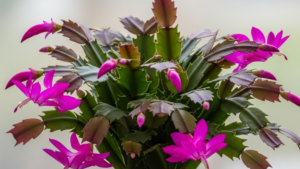
The Christmas cactus, scientifically known as Schlumbergera, is a tropical plant that blooms in winter and brightens up our homes during the holiday season. Despite its name, it is not a desert plant but a forest cactus native to the humid jungles of Brazil. Unlike typical cacti, it thrives in shaded and humid environments and requires specific care for abundant flowering each year. 🌵
Here is a complete guide to caring for your Christmas cactus so it stays healthy and blooms on time. ✨
1. Light and Location
The Christmas cactus prefers bright but indirect light. In its natural habitat, it grows in the shade of trees, receiving filtered light throughout the day. At home, the ideal spot is near a north- or east-facing window. Avoid direct afternoon sun, which can burn its delicate leaves. ☀️
During the flowering period, place the plant in a spot with consistent brightness. Too much light or sudden changes in location can stress the plant and cause flower buds to drop. 🚫
2. Temperature and Humidity
As a tropical cactus, Schlumbergera loves mild temperatures and high humidity. Ideal daytime temperatures range between 18°C and 24°C, while cooler nights around 15°C can encourage blooming. 🌡️
Humidity is also crucial. In dry climates or heated homes during winter, the air can become too dry. Mist the plant occasionally or place a tray of water nearby to increase ambient humidity. Grouping plants together also helps create a more humid microclimate. 💧
3. Watering: Less is Better
One of the most common mistakes is overwatering. Unlike desert cacti, the Christmas cactus needs regular watering, but you should let the soil dry slightly between waterings. Test the surface of the soil with your finger: if it feels dry, it’s time to water.
During flowering, you can slightly increase watering, but never overdo it. Standing water can lead to root rot, which is often fatal for the plant. Always use a pot with drainage holes. 🪴
4. Soil and Repotting
The Christmas cactus needs well-draining soil. A good mix consists of potting soil enriched with perlite, orchid bark, or sand to improve drainage. Avoid compact garden soil or standard potting mixes that retain too much moisture. 🌱
Repotting is only necessary every 2 to 3 years or when the roots become crowded in the pot. The best time to repot is late winter or early spring, after flowering.
5. Fertilization for Vigorous Growth and Abundant Blooming
To promote healthy growth, fertilize your Christmas cactus every month from spring until early autumn. Use a balanced liquid fertilizer diluted to half strength. Avoid fertilizers high in nitrogen, which encourage leaf growth at the expense of flowers. 🌸
In autumn, stop fertilizing to allow the plant to rest and prepare for blooming. A rest period with reduced watering and cooler temperatures encourages bud formation.
6. Pruning and Propagation
After flowering, you can prune your Christmas cactus to encourage branching and more abundant flowering the following season. Simply twist or cut a few segments at the end of each stem. ✂️
These cuttings can be used to propagate new plants. Let the cut ends dry for a day or two before planting them in slightly moist soil. In a few weeks, they will develop roots and start growing.
7. How to Encourage Blooming
For your Christmas cactus to bloom year after year, it needs a short period of dormancy. From late autumn, reduce watering and place the plant in a cooler, darker location for about six weeks. Ideally, it should have 12 to 14 hours of darkness per day and temperatures between 10°C and 15°C. ❄️
Once buds appear, return the plant to its usual spot and resume normal watering. Avoid moving the plant once buds have formed, as this can cause them to drop.
8. Common Problems to Watch For
- Bud drop: Often caused by sudden changes in temperature or light.
- Yellowing leaves: Usually a sign of overwatering.
- No flowering: This may be due to too much light at night or insufficient rest period. ⚠️
Final Thoughts
The Christmas cactus is a rewarding plant that, with proper care, can live and bloom for decades. Its unique beauty and festive flowers make it a favorite during the holiday season. By recreating its natural environment (filtered light, moderate humidity, and light watering), you will enjoy a healthy and flowering cactus year after year. 🎄🌺
Leave a Reply