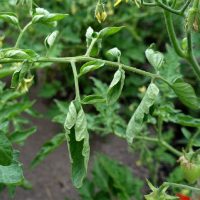
Tomato leaves twisting, curling, or “boat-shaped” is a very common problem that worries many gardeners. The good news? In most cases, it’s not a disease and can be fixed quickly and easily. Here’s what’s really happening and how to solve it! 🍅✨
Main Causes of Curling Tomato Leaves
- Physiological curling (most common)
- Too much heat and bright sun
- Irregular watering (too much or too little)
- High nitrogen in the soil
- Aphids or whiteflies (check the underside of leaves)
- Viral diseases (less common, usually accompanied by other symptoms like yellow spots)
The Simplest and Most Effective Solutions
✅ Solution 1: Proper Watering Regime
- Water deeply but infrequently (2–3 times per week, depending on weather).
- Water only at the base, early in the morning or evening.
- Avoid watering in the middle of a hot day.
✅ Solution 2: Light Shading If the sun is very strong, protect the plants with shading net (30–40% shade) during the hottest hours (11:00–16:00).
✅ Solution 3: Mulching Cover the soil with a thick layer (8–10 cm) of straw, grass clippings, or cardboard. This keeps moisture even and protects roots from temperature swings.
✅ Solution 4: Balanced Feeding
- Stop using high-nitrogen fertilizers for a while.
- Switch to fertilizers rich in potassium and phosphorus (wood ash, banana peel infusion, or tomato-specific fertilizer).
✅ Solution 5: Natural Protection Against Pests Spray the undersides of leaves with:
- Nettle infusion
- Garlic + soap solution
- Diluted milk (1:10 with water)
When to Worry?
If the leaves are not just curling but also:
- Turning yellow with spots
- Becoming very deformed
- The plant stops growing
…then it may be a virus. In that case, remove and destroy the affected plant to protect the others.
Conclusion 🌈
In 80–90% of cases, curled tomato leaves are caused by heat stress or irregular watering. With proper watering, mulching, and light shading, the new leaves will grow perfectly normal. Don’t panic — your tomatoes can still give you a great harvest!
Pro Tip: Water deeply in the evening and mulch generously — this is the most effective prevention.
Leave a Reply