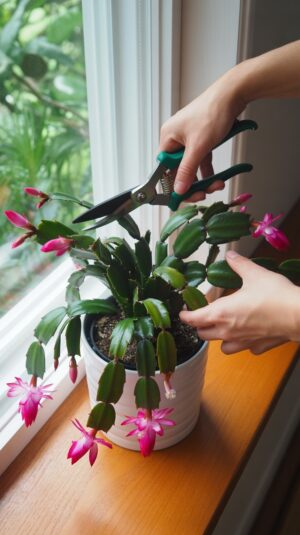
Recently, a friend asked me why his Christmas Cactus (Schlumbergera spp.) refused to bloom and looked generally unhappy. He insisted he was doing everything “by the book,” yet the plant was struggling.
As someone who has grown these plants for years, I realized he was falling victim to some very common misconceptions. It’s easy to think you are helping your plant when you are actually hindering it. Here are 10 common mistakes to avoid if you want a thriving, blooming cactus.
1. Overwatering: The “More is Better” Myth
Many people assume that because it’s a tropical plant, it needs constant water. This is the fastest way to kill it. The Reality: The Christmas Cactus prefers its soil to dry out slightly between waterings. Constant moisture leads to soggy roots and eventually root rot. The Fix: Use the “finger test.” Stick your finger into the top inch of soil. If it’s dry, water it. If it’s damp, wait. Always ensure your pot has drainage holes so water never sits at the bottom.
2. Keeping it in the Dark
There is a belief that this cactus loves deep shade. While it doesn’t like scorching noon sun, it certainly won’t bloom in the dark. The Reality: These plants need bright, indirect light to produce flowers. The Fix: An east-facing window is ideal. It provides gentle morning sun but protects the plant from the harsh afternoon rays that can burn the leaves.
3. Skipping the Dormancy Period
This is a mistake even seasoned gardeners make. They treat the plant the same year-round. The Reality: After blooming, the Christmas Cactus needs a rest phase (dormancy) of about 6–8 weeks to recharge. The Fix: During this rest period, reduce watering and move the plant to a cooler spot (around 50-60°F / 10-15°C) with slightly less light. This signals the plant to prepare for the next bloom cycle.
4. Using Heavy Potting Soil
Using standard garden soil is a rookie mistake. The Reality: In nature, these plants are epiphytes—they grow on trees, not in dense ground soil. Standard soil retains too much moisture and suffocates the roots. The Fix: Use a well-draining mix. A combination of cactus soil mixed with perlite or orchid bark provides the aeration these roots crave.
5. Ignoring Temperature and Humidity
These plants hate drama—specifically, dramatic temperature changes. The Reality: Drafty windows, heaters, and air conditioners stress the plant out. The Fix: Keep the temperature stable, ideally between 65-75°F (18-24°C) during the growing season. Also, don’t forget humidity! Aim for 50-60% humidity by misting the plant or using a pebble tray with water.
6. Fertilizing Incorrectly (Or Not at All)
Some people never feed their plant; others blast it with nitrogen. Both are problematic. The Reality: High-nitrogen fertilizers encourage green leaves but discourage flowers. The Fix: Use a balanced fertilizer (like 10-10-10) during the growing season. As the blooming period approaches, switch to a formula lower in nitrogen and higher in phosphorus to boost flower production. Feed every 4–6 weeks.
7. Neglecting Pruning and Repotting
If your plant looks “leggy” or thin, you’re likely skipping this step. The Reality: Pruning encourages branching, which means more ends for flowers to grow on. The Fix: In spring, prune back stems to encourage a bushier shape. As for repotting, only do it every 2–3 years. These plants actually like being slightly root-bound!
8. Moving the Plant While It’s Budding
This is the most heartbreaking mistake. You see buds, you get excited, you move the plant to a centerpiece location… and the buds fall off. The Reality: The Christmas Cactus is incredibly sensitive to environmental changes during budding. The Fix: Once you see buds forming, do not move the plant. Changes in light or temperature will cause “bud drop.” Leave it exactly where it is until it finishes blooming.
9. Forgetting Pest Control
Because it’s a cactus, people assume it’s invincible. The Reality: Mealybugs and spider mites love these plants. The Fix: Make it a habit to inspect the undersides of leaves and stems. If you see white cottony spots or fine webbing, treat it immediately with neem oil or insecticidal soap.
10. Misinterpreting Drooping Leaves
When leaves droop, our instinct is to grab the watering can. The Reality: Drooping can be caused by thirst, but also by too much water (root rot), low humidity, or lack of nutrients. The Fix: Don’t assume it needs water. Check the soil first. If the soil is wet and the plant is drooping, you are likely overwatering. Diagnose the root cause before acting.
Leave a Reply