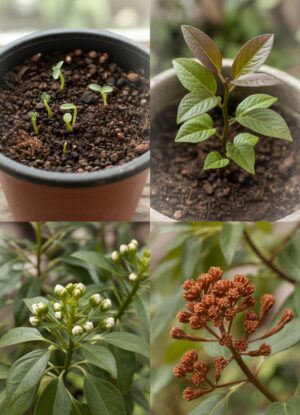
Cloves (Syzygium aromaticum) are so much more than just a dried spice in your pantry. They are a symbol of warmth, a staple in traditional medicine, and a powerhouse of flavor for everything from savory roasts to holiday desserts.
But imagine having a fresh, living source of this aroma right in your living room.
Growing cloves at home allows you to harness their antibacterial and anti-inflammatory properties while filling your space with a natural, spicy scent. While they are tropical plants, with the right technique, you can easily cultivate them indoors. Here is your step-by-step guide to growing cloves from seed.
Why You Should Grow Cloves at Home
Before we get their hands dirty, here is why this plant deserves a spot in your indoor garden:
- Natural Air Freshener: The foliage releases a subtle, spicy aroma that purifies the air.
- Culinary Freshness: Homegrown cloves are organic and potent.
- Wellness Benefits: Known for analgesic properties, they are great for DIY skin and hair remedies.
Step 1: Timing is Everything
Cloves are tropical natives, meaning they crave warmth. The best time to plant them is late winter or early spring. During this time, daylight hours increase, and temperatures rise, providing the energy seeds need to wake up. Aim to keep the environment between 77°F and 86°F (25°C – 30°C). If your home is cool, you may need a heat mat or a warm spot near a radiator.
Step 2: Prepare the Perfect Soil Mix
To prevent rot, drainage is non-negotiable.
- The Pot: Choose a container that is at least 6–8 inches (15–20 cm) deep with drainage holes.
- The Soil: Use a fertile, well-draining potting mix. A blend of potting soil with compost or coconut coir works best. It needs to hold moisture but remain airy so roots can breathe.
- Prep: Moisten the soil before planting. It should feel like a damp sponge—wet, but not dripping.
Step 3: Sowing the Seeds
Clove seeds are delicate, so handle them with care.
- Place the seeds on the soil surface.
- Gently press them in, but do not bury them deep. They only need to be about 2 cm (approx. 1 inch) deep.
- Space them out: If planting multiple seeds, leave 2-3 inches of space between them.
- Create a Greenhouse: Cover the pot with a clear plastic bag or plastic wrap. This locks in humidity and warmth, mimicking the tropical rainforest floor.
Step 4: Lighting Location
Your clove plant needs light, but it’s not ready for a sunbath yet. Place the pot in a warm, bright area with indirect sunlight.
- Avoid: Harsh, direct midday sun (it will scorch the seedlings) and cold drafts from windows or AC units.
- Ideal Spot: A bright corner of a room or a windowsill with a sheer curtain.
Step 5: The Watering Routine
Consistency is key to germination. You want the soil to be constantly damp, but never swampy.
- Mist Daily: Use a spray bottle to mist the soil every morning. This is gentler than pouring water.
- Be Patient: It usually takes about four weeks for the first green shoots to appear.
- Acclimate: Once you see green sprouts, you can gradually remove the plastic cover to let the plant get used to the room’s humidity.
Step 6: Transplanting and Long-Term Care
Once your seedlings stand about 4–6 inches (10–15 cm) tall, they are ready for a bigger home. You can transplant them into larger pots or, if you live in a tropical zone (USDA 11+), out into the garden.
- Feeding: Use a balanced organic fertilizer every few weeks during the growing season to encourage lush leaves.
- Ongoing Light: As the plant matures, it can handle more light, but it still prefers protection from the hottest afternoon sun.
3 Pro-Tips for Success
- Seed Freshness Matters: Dried cloves from the spice aisle will not grow. You must source fresh, viable seeds from a nursery or specialized online seller.
- Patience Pays Off: Growing from seed is rewarding, but slow. It takes years for a clove tree to flower. If you want immediate blooms, consider buying a mature sapling.
- Watch the Temperature: If your home gets cold in the winter, ensure you move your clove plant away from frosty windows.
Final Thoughts
Growing cloves is an investment in your home’s ambiance and your own self-sufficiency. It transforms a simple gardening project into a fragrant oasis. Whether you use the leaves for tea, the buds for cooking, or just enjoy the scent, this is one houseplant that gives back.
Ready to start? Grab your seeds and get planting this spring!
Leave a Reply