Introduction
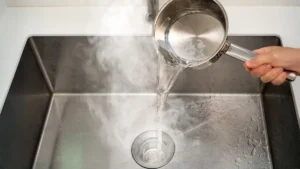
It is a scene that plays out in kitchens all over the world every single day. You have just finished boiling a pot of pasta or potatoes, you carry the heavy pot to the sink, and tip the scalding water down the drain. It feels like second nature. In fact, many people believe that pouring boiling water down the sink is actually good for it—a way to “sanitize” the pipes or melt away clogs.
However, professional plumbers warn that this common habit is actually one of the most damaging things you can do to your home’s plumbing system.
While a single instance might not cause immediate disaster, the cumulative effect of thermal shock on your pipes can lead to expensive repairs, leaks, and stubborn blockages. Before you drain your next pot, read on to discover the 5 hidden dangers of pouring boiling water down the sink.
1. You Could Melt or Warp Your PVC Pipes
The most critical reason to avoid this habit lies in the materials your plumbing is made of. In older homes, pipes might be made of iron or copper, but in the vast majority of modern homes, the drainage system is made of PVC (Polyvinyl Chloride) plastic.
The Science of Heat
Standard PVC piping is designed to withstand temperatures up to approximately 140°F (60°C). Water boils at 212°F (100°C).
When you pour boiling water directly into the drain, you are subjecting plastic pipes to temperatures far exceeding their safety rating.
- Softening: The intense heat can soften the plastic.
- Warping: As the plastic softens, it can warp or lose its shape, leading to loose joints.
- Cracking: In some cases, the sudden shift from cold to extreme heat (thermal shock) can cause the pipe to crack instantly.
Once a pipe is warped or cracked behind a wall or under the floorboards, you are looking at a major renovation project to fix it.
2. The “Grease Trap” Paradox: You Are Creating Worse Clogs
A common myth is that boiling water dissolves grease. While it is true that hot water melts fat, it does not make it disappear. It simply moves it further down the line.
When you pour boiling water on grease, it liquefies and travels deeper into your plumbing system. However, as it moves away from the sink, the water cools down rapidly. When it cools, that grease solidifies again—but now it is stuck deep in the main sewer line rather than in the P-trap under your sink.
The Result: A deep, hardened fatberg that a simple plunger cannot fix. Removing a blockage deep in the system often requires professional hydro-jetting or an electric snake.
3. It Destroys Rubber Seals and Gaskets
Your plumbing system isn’t just pipes; it is a complex network of connections kept watertight by rubber gaskets, washers, and silicone seals. These are the unsung heroes that prevent water from leaking into your cabinets.
Rubber and silicone are not designed to withstand boiling temperatures repeatedly.
- Drying Out: The heat can cause the rubber to dry out and become brittle.
- Cracking: Once brittle, the seals crack and lose their elasticity.
- The Leak: You might not notice it immediately, but eventually, water will start dripping under your sink, causing mold and rot in your wooden cabinetry.
4. The Risk of “Backsplash” Burns
Safety isn’t just about the house; it’s about you, too. Pouring a large volume of boiling water into a sink requires caution.
If the water hits the surface of the sink, a pile of dirty dishes, or the drain opening too fast, it creates a “splashback” effect.
- Steam Burns: The rising steam alone can scald your face and arms.
- Splash Burns: If the water hits an air pocket in the drain, it can erupt upwards, splashing boiling liquid onto your skin.
This risk is significantly higher if you are rushing, if the sink is cluttered, or if there are children or pets nearby.
5. Negative Environmental Impact
We often treat our drains like magic black holes where waste disappears, but everything we pour down there ends up somewhere.
Pouring boiling water, especially when mixed with food scraps, oils, and organic matter, can disrupt the bacterial balance in septic tanks and sewage systems.
- Septic Systems: If you rely on a septic tank, the bacteria there are essential for breaking down waste. Extreme temperatures can harm this biome, leading to a less efficient system.
- Fats and Oils: As mentioned in point #2, pushing fats deeper into the municipal sewage system contributes to massive “fatbergs” that clog city sewers, causing environmental hazards and costly public repairs.
The Solution: What Should You Do Instead?
You still need to drain your pasta, so what is the safe way to do it? You don’t need to buy special equipment; you just need to change your technique.
1. The “Cold Water Sandwich”
This is the easiest fix. Before you tip the boiling water into the sink, turn on the cold water tap. Leave the cold water running while you pour the boiling water, and keep it running for a few seconds after. The cold water mixes with the hot, instantly tempering the temperature to a level that is safe for your PVC pipes and seals.
2. Let It Cool
If you are emptying a kettle or a pot of boiled vegetables, simply set it on the stove to cool down for 5–10 minutes before draining. It doesn’t need to be ice cold, just not boiling.
3. Use it in the Garden (The Eco-Friendly Way)
If you are boiling vegetables or eggs (unsalted water), let the water cool completely and use it to water your houseplants or garden. It is packed with nutrients! Alternatively, boiling water is an excellent natural weed killer. Pour it directly onto weeds in your driveway cracks—just don’t pour it down the sink!
Conclusion
Your plumbing system is the veins of your home, hidden behind walls and under floors. While it is built to be durable, it isn’t indestructible. The simple habit of turning on the cold tap while draining hot water can save you hundreds, if not thousands, of dollars in plumbing repairs over the lifespan of your home.
Treat your pipes with care, and they will keep things flowing smoothly for years to come.
Frequently Asked Questions (FAQ)
Can I pour boiling water down the sink to unclog it? It is not recommended. While it might work on minor soap scum, it can push grease clogs deeper or damage the pipe joints. Use a plunger or a mechanical snake for clogs instead.
Is it safe if I have a porcelain sink? Porcelain is also at risk. Pouring boiling water into a cold porcelain sink can cause “thermal shock,” leading the sink bowl itself to crack. Always run the tap first!
What about the garbage disposal? Garbage disposals have seals and mechanical parts that can also be damaged by extreme heat. Furthermore, cooking fats should never go in the disposal, hot or cold.
Leave a Reply