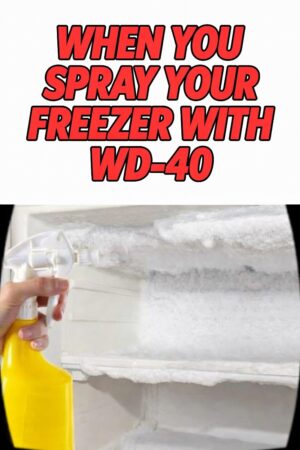
Have you ever opened your freezer only to find a thick layer of ice encrusting the walls, shelves, and maybe even your frozen pizzas? It’s a common frustration for many households, especially with older or manual-defrost models. Recently, a viral tip has been circulating online: spraying WD-40 inside your freezer to prevent ice from building up. The idea is that this multi-purpose lubricant creates a water-repellent barrier, stopping moisture from freezing on surfaces. But is this hack safe, effective, or just a recipe for disaster? Let’s break it down. 4 “LARGE”
What Is WD-40, Anyway?
WD-40, short for “Water Displacement, 40th formula,” is a household staple invented in 1953 for protecting rocket parts from rust. It’s a blend of lubricants, solvents, and anti-corrosion agents that excels at displacing water, loosening stuck parts, and preventing rust. It’s fantastic for squeaky doors, frozen locks, or even winter car hacks like preventing ice on windshields or shovels. 16 However, its formula includes volatile organic compounds that aren’t meant for areas where food is stored. 0 “LARGE”
Does the WD-40 Freezer Hack Work?
Theoretically, yes—WD-40’s water-repelling properties could create a thin film that makes it harder for frost to adhere to freezer walls. Some users in online forums have pondered this for RV refrigerators or small freezers, suggesting a light spray after defrosting might reduce buildup. 15 In winter scenarios outside the kitchen, like spraying it on car door seals or number plates, it does help prevent ice sticking. 12
But here’s the catch: applying WD-40 inside a freezer is a bad idea. Reports from users who tried similar applications (like lubricating a noisy freezer fan) describe a persistent chemical odor that permeates the entire appliance and taints food. One account details steaks tasting like WD-40 after the spray was used. 11 Experts advise against it because WD-40 isn’t food-grade; its chemicals can contaminate edibles, posing health risks. Plus, in an airtight space like a freezer, the fumes linger, and repeated exposure could lead to buildup of residues that attract more dirt over time.
In short, while it might temporarily reduce ice, the downsides far outweigh any benefits. WD-40’s official uses don’t include food-contact surfaces, and even the company recommends avoiding it on windows or areas near food. 8
Why Does Ice Build Up in Freezers?
To understand better hacks, let’s look at the root causes. Ice buildup, or frost, occurs when warm, moist air enters the freezer and condenses, then freezes. Common culprits include:
- Faulty door seals (gaskets): Worn or dirty seals let in humid air. 23
- Frequent door openings: Each time you open the door, moisture sneaks in. 26
- Improper temperature settings: Freezers should be at 0°F (-18°C); warmer settings cause more frost. 29
- Overloading or poor organization: Blocking air vents disrupts circulation, leading to uneven cooling and ice pockets. 21
- Non-frost-free models: Manual defrost freezers naturally accumulate frost over time.
Better Ways to Prevent Ice Buildup
Skip the WD-40 and try these proven, safe methods instead:
- Check and Maintain Door Seals: Inspect gaskets for cracks or debris. Clean them with warm soapy water and replace if damaged. A simple test: Close a dollar bill in the door—if it pulls out easily, the seal is weak. 27
- Set the Right Temperature: Keep your freezer at 0°F. Use a thermometer to verify, and avoid setting it too cold, which can waste energy without reducing frost.
- Organize Smartly: Use airtight containers or freezer bags to minimize moisture release from food. Leave space for air circulation—don’t cram items against vents. 23 Wrap items tightly to prevent “freezer burn,” which is essentially dehydration from sublimation.
- Minimize Door Time: Plan ahead when grabbing items. Teach household members to close the door quickly. In hot, humid climates, this is especially crucial.
- Regular Defrosting and Cleaning: For non-frost-free models, defrost every few months or when ice reaches 1/4 inch thick. Unplug, remove food, and let it melt naturally or use a hairdryer. Clean with baking soda and water to neutralize odors. 21 Place an open box of baking soda inside to absorb moisture.
- Upgrade if Needed: Consider a frost-free freezer, which automatically defrosts using heaters and fans, though they use more energy. 22
Conclusion
The WD-40 freezer hack might sound clever, but it’s more myth than miracle—and potentially hazardous. Stick to practical maintenance and organization to keep your freezer frost-free. Not only will this save you time on defrosting, but it’ll also extend your appliance’s life and keep your food safe. If ice persists despite these tips, it could signal a deeper issue like a faulty thermostat—time to call a professional.
By following these steps, you’ll avoid the hassle of chipping away at ice and enjoy a more efficient kitchen. Have you tried any freezer hacks? Share in the comments!
Leave a Reply