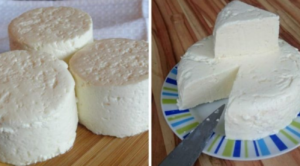
In 2026, the art of “back-to-basics” cooking is thriving as we rediscover the satisfaction of making our own staples. 🧀 Making cheese at home might sound like a complex chemical process involving specialized labs, but in reality, it is a simple and beautiful biological reaction. With just three everyday ingredients—milk, lemon, and yogurt—you can create a fresh, creamy, and chemical-free cheese in your own kitchen. This guide explains the science of coagulation and provides the steps to your first homemade batch. 📈✨🥛
The Biology of the Curd 📝
To transform liquid milk into solid cheese, you must trigger a process called acidification.
- The Role of Yogurt: Adding yogurt introduces healthy lactic bacteria and proteins that provide the cheese with its creamy texture and a subtle, complex tang. 🧪🥛
- The Role of Lemon: The citric acid in the lemon acts as a coagulant. When added to hot milk, it causes the milk proteins (casein) to clump together, separating from the liquid (whey). 🍋⚡
- The Result: This separation creates “curds and whey,” the fundamental building blocks of almost every cheese in existence. 🧬🧀
Ingredients and Preparation 🛠️🏺
- The Base: 1 liter of whole milk (the higher the fat content, the creamier the cheese). 🥛
- The Catalyst: The juice of half a lemon (or about 2 tablespoons). 🍋
- The Texture: 1 natural yogurt (approx. 125g). 🏺
- The Flavor: A pinch of salt (optional). 🧂
Step-by-Step Cheesemaking 💡
- Heating the Milk: Pour the milk into a pot and heat it over medium heat. Bring it just to the point of boiling (around 80°C to 90°C), but do not let it boil over. 🌡️🔥
- Adding the Components: Once hot, stir in the yogurt thoroughly. Then, slowly add the lemon juice. You will immediately see the milk begin to separate into white clumps and a yellowish liquid. 🌪️🧪
- Resting: Turn off the heat, cover the pot, and let it sit for 15 to 20 minutes. This allows the coagulation to complete. ⏳🌑
- Draining: Line a strainer with a clean cheesecloth or a fine cotton towel. Pour the mixture in. The liquid whey will drain away, leaving the solid curds behind. 💧🛡️
- Setting: Squeeze out the excess moisture. Place a weight on top of the cheese (still in the cloth) and refrigerate for 3 to 4 hours. The longer it sits under pressure, the firmer the cheese will be. ❄️⚓
Why This is the 2026 Kitchen Essential 🌍
Commercial cheeses are often loaded with stabilizers, excess sodium, and preservatives. Making your own cheese ensures you are consuming a pure, high-protein product with zero additives. Plus, the leftover yellowish liquid (the whey) is packed with protein—don’t throw it away! Use it in smoothies, soups, or even as a nutrient-rich “water” for your garden plants. 🏡🌸✨
Leave a Reply